


How Are Church Pews Installed?
Church pews are installed from a measured layout: rows and aisles are marked on the floor, each pew is set, leveled and fastened down, then accessories go on. The installation itself is the quick part. The decisions made before the truck arrives are what make it go smoothly.
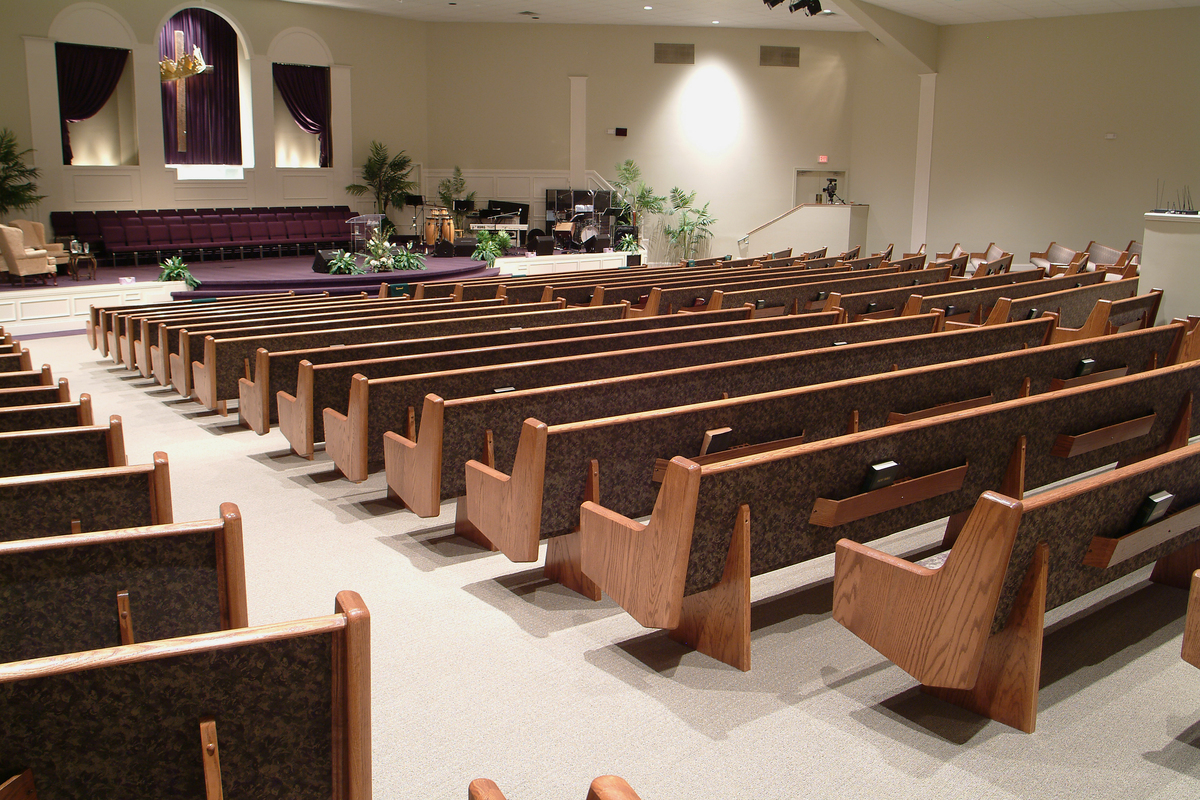
The Short Answer
Pews are placed from a layout drawing, leveled, and fastened to the floor. With Kivett's, the same company that builds or refinishes the pews also removes the old ones, delivers the new ones and installs them, using its own factory-trained installation team.
Most churches install pews once in a generation, which means almost nobody on the building committee has done it before. That is why the questions arrive in a slightly anxious order: will the sanctuary be out of use, does the carpet need to come up, who hauls away the old pews, and what happens if the rows do not line up with the center aisle.
Each of those has a straightforward answer. The rest of this page takes them in the order they come up on a real project.
Back to topInstallation, Step by Step
1. The layout is measured and drawn
Before any pew is built, the sanctuary is measured and a layout is drawn: how many rows, how long each pew is, where the aisles fall, and how far apart the rows sit. Row spacing is the decision that affects comfort most, and it changes if kneelers are included. How far apart church pews should be covers the usual ranges. Aisle widths and exit paths also have to satisfy your local fire and building code, which is usually based on the NFPA 101 Life Safety Code.
2. Old pews come out
Kivett's technicians remove the existing pews and load them into specially designed trucks. If they are being refinished, they travel to the plant in Clinton, North Carolina. If they are being replaced, churches often want to know what to do with old church pews, and it is worth deciding that before removal day.
3. Rows are marked on the floor
The layout is transferred to the sanctuary floor so the first row is square to the chancel and every row after it runs parallel. This is the step that decides whether the finished room looks orderly. A row that drifts an inch at one end becomes obvious from the pulpit.
4. Pews are set, leveled and fastened
Each pew is placed on its mark, leveled so it does not rock on an uneven floor, and fastened down. More on that below.
5. Accessories go on and the room is cleaned
Bookracks, cup holders and kneelers are attached and aligned so they sit at the same height down every row. Then the installation team cleans up and hands the sanctuary back ready for the next service.
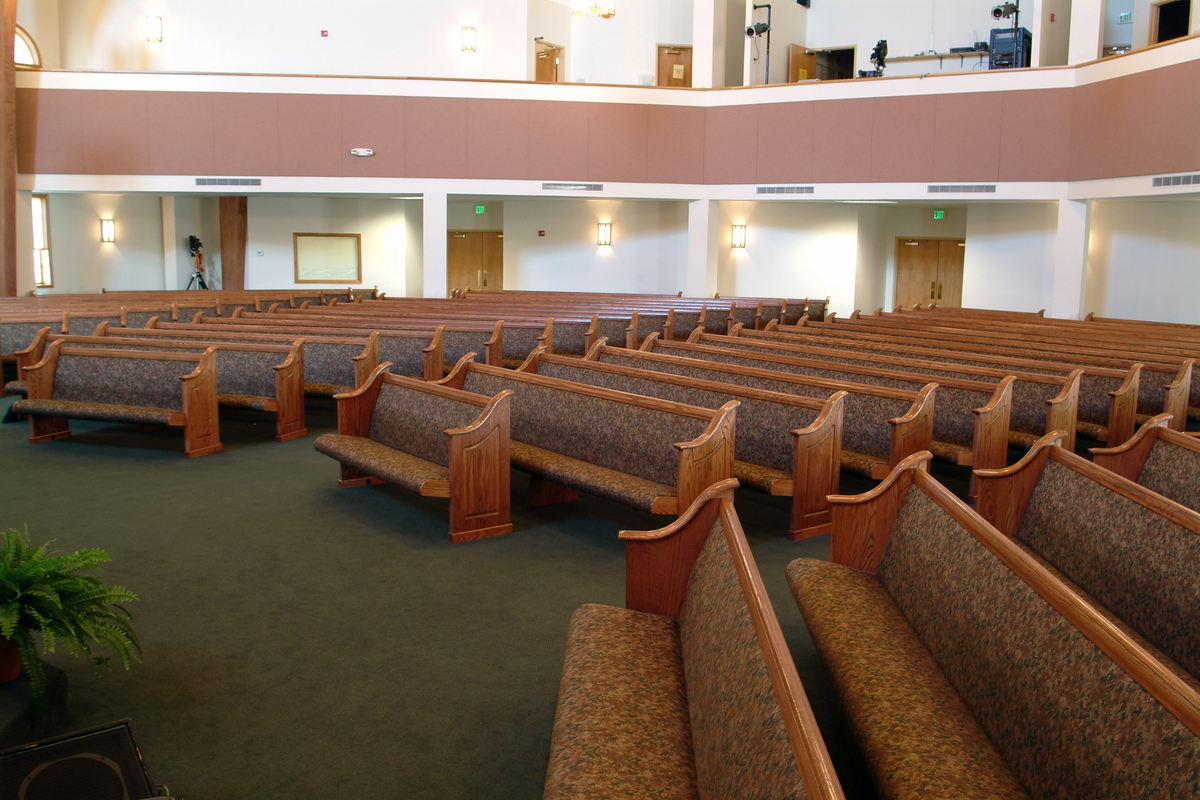
Curved rows are laid out from a center point rather than a straight line, which is why accurate floor marking matters even more.
Back to topFastening Pews to the Floor
Fixed pews are fastened to the floor for three practical reasons. A row of adults leaning back and standing up puts real force on a pew's ends, and fastening keeps it from tipping. It keeps rows straight over years of use. And it holds aisles at the width they were designed for, which matters for exits and wheelchair access.
How a pew is fastened depends on what it is sitting on:
- Concrete slab. Common in newer sanctuaries. Fasteners go into the concrete.
- Wood-framed floor. Common in older churches and in balconies. Fasteners need solid material beneath them, so the floor structure is checked first.
- Sloped floor. Some sanctuaries slope toward the front. Pews on a slope have to be fitted so the seat stays level even though the floor is not.
- Carpet. Pews can be fastened through carpet, but the order of trades matters, which is the next section.
If your church ever plans to move or remove pews for events, raise it at the layout stage. That is a different design conversation, and pews versus chairs may be worth reading first.
Back to topWhat Your Church Should Do First
Most installation-day problems start weeks earlier. A short list solves nearly all of them:
- Settle the flooring. Carpet laid after fastened pews has to be cut around every pew end. If new flooring is part of the project, schedule it first or agree the sequence with both trades.
- Finish other trades. Painting, lighting, sound cabling in the floor and HVAC work should be done before pews go in, not worked around them.
- Confirm the layout. Sign off on aisle widths, row count and any wheelchair spaces before manufacturing starts. Can church pews be modified covers wheelchair space sizes.
- Share the calendar. Kivett's schedules installation around services, midweek programs and events. Include weddings and funerals that are already booked.
- Clear the route. Make sure the path from the truck to the sanctuary is open, including doors that need propping and tight stair turns.
- Pick one contact. One person with authority to answer questions on the day saves a lot of phone calls.
Doing more than pews? If the sanctuary is also getting new flooring or paint, how to plan a church renovation without disrupting Sunday services walks through sequencing the whole project.
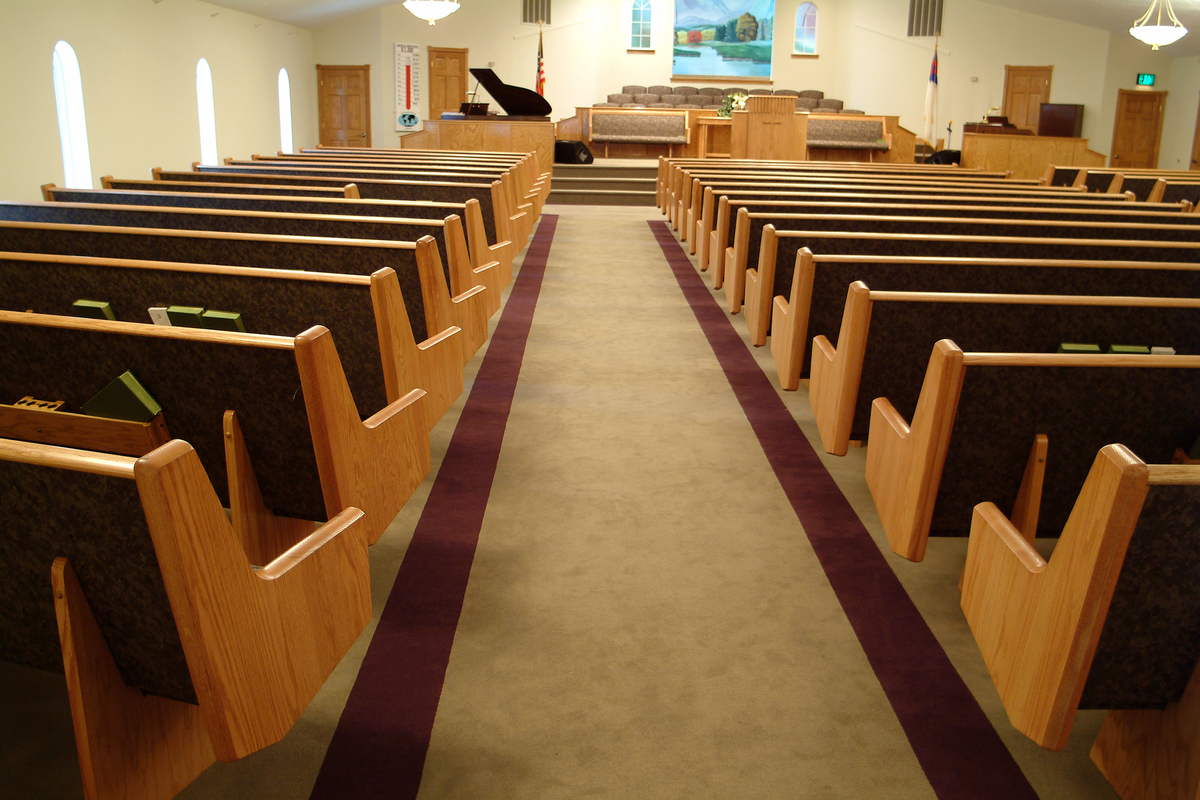
Straight rows square to the chancel, with the center aisle held at its designed width.
Back to topFrequently Asked Questions
How are church pews installed?
Church pews are installed from a measured layout plan. The installers mark row positions and aisles on the floor, set each pew in place, level it, and fasten it to the floor so it cannot tip or shift. Accessories such as bookracks and kneelers are then attached and aligned, and the sanctuary is cleaned before it is handed back.
Are church pews attached to the floor?
Yes, fixed pews are normally fastened to the floor. A loaded pew full of people leaning back and standing up puts real force on its ends, and fastening keeps rows straight, prevents tipping and keeps aisles at the width the layout was designed for. The fastening method depends on whether the floor is concrete or wood framing and whether it is carpeted.
Should new carpet go in before or after the pews?
Settle the flooring plan before the pews are installed. Carpet laid after fastened pews has to be cut around every pew end, which is slower and leaves more seams. If new flooring is part of the project, schedule it first, or decide with your installer exactly how the two trades will be sequenced.
Do we have to remove our old pews ourselves?
Not with Kivett's. Kivett's technicians remove existing pews and transport them in specially designed trucks, whether they are going to the Clinton, North Carolina plant for refinishing or being replaced. New and refinished pews are delivered and installed by Kivett's own factory-trained installation team.
Can pew installation be scheduled around our services?
Yes. Kivett's plans installation around the church calendar, including weekend services, midweek programs and special events. The most useful thing a church can do is share its calendar early, including weddings and funerals that are already booked.
What should our church do before installation day?
Finish any flooring, painting or electrical work in the sanctuary, clear the room of anything not being installed, confirm the layout drawing including aisle widths and any wheelchair spaces, and make sure the delivery route from the truck to the sanctuary is clear. Name one person as the contact for the installation team.
Related Reading
Still choosing pews? Start with how to buy church pews in four steps and church pew dimensions. If you are keeping your current pews, see what happens during a Kivett's pew restoration project. Browse styles on the church pews page and finished sanctuaries in the pew gallery.
Start With the Layout
Clinton, NC. Manufacturing, delivering and installing church pews across the Eastern United States since 1958.