

When church pews start looking worn, the conversation often jumps straight to replacement. New pews feel like a fresh start — but they come with a significant price tag, months of lead time, and the permanent loss of wood and craftsmanship that may be irreplaceable. In most cases, that conversation should never have left the refinishing option.
At Kivett's Fine Church Furniture, we assess pews in sanctuaries of every size and age. The same patterns appear again and again: churches prepared to spend on full replacement when professional refinishing would deliver an equal — or better — result for a fraction of the cost. Knowing the difference starts with recognizing these five signs.
The Finish Is Worn Through, but the Wood Beneath Is Sound
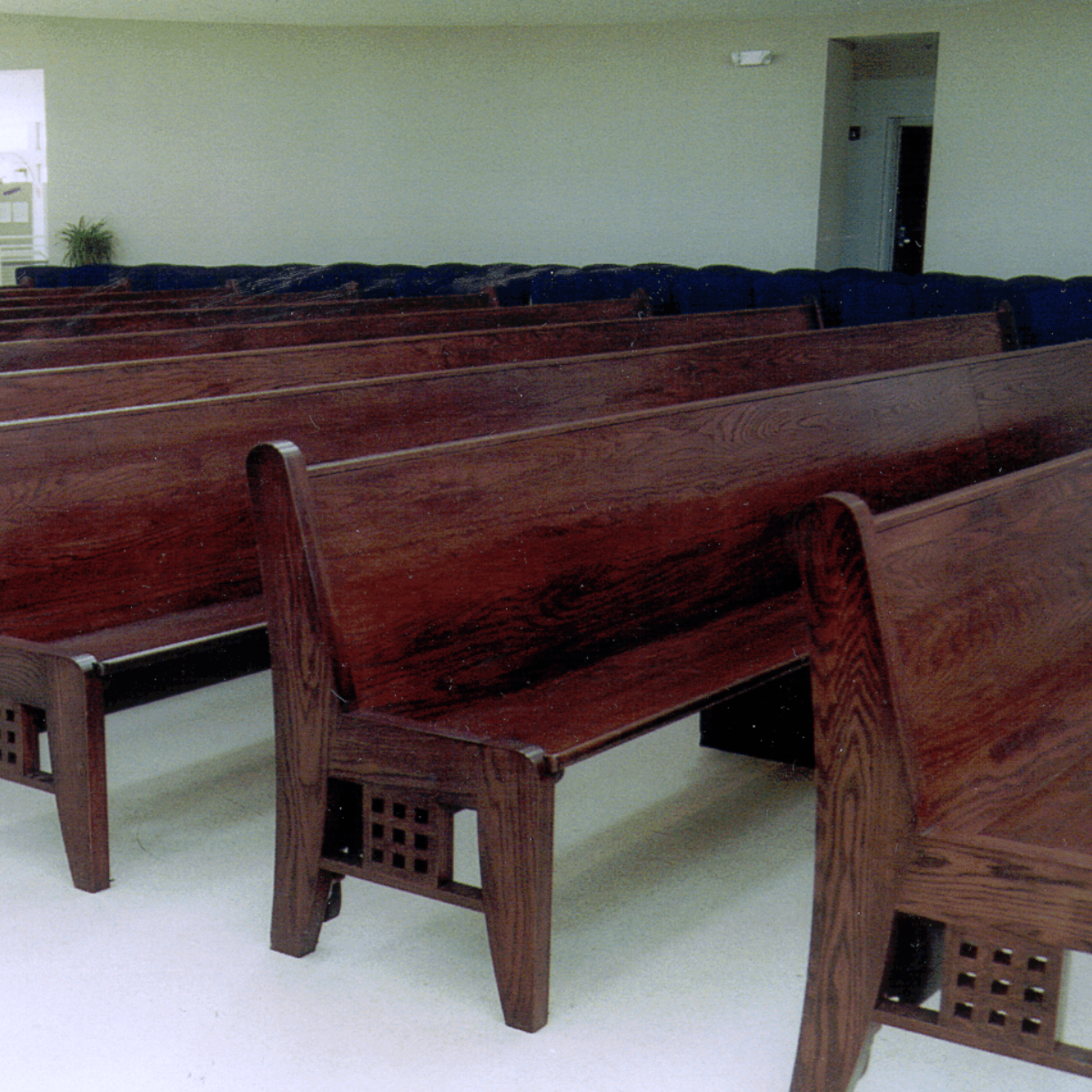
The most common sign we see is finish that has been worn down to bare wood at the high-contact points — armrests, seat edges, the tops of pew backs where hands grip. The wood itself is hard, structurally intact, and perfectly capable of holding a new finish for another twenty or thirty years.
This is a finish problem, not a wood problem. The original wood is often old-growth oak, cherry, walnut, or hard maple — denser and more durable than most new pew material available today. Replacing it would mean discarding superior wood simply because its surface coating has worn away.
How to check: Run your hand firmly along the armrest and front seat edge. If you feel bare, smooth wood with no splintering, checking, or soft spots, the wood itself is fine. What you are feeling is an exposed surface that needs a new protective coating — not a new pew.
The Color Has Faded or Gone Uneven Across the Sanctuary
UV exposure, cleaning products, and the simple passage of time bleach and oxidize wood finishes. The result is pews that no longer match — those near windows have lost their color, while shaded pews have retained theirs. The overall effect is a sanctuary that looks patchy, tired, and mismatched even when every pew is structurally perfect.
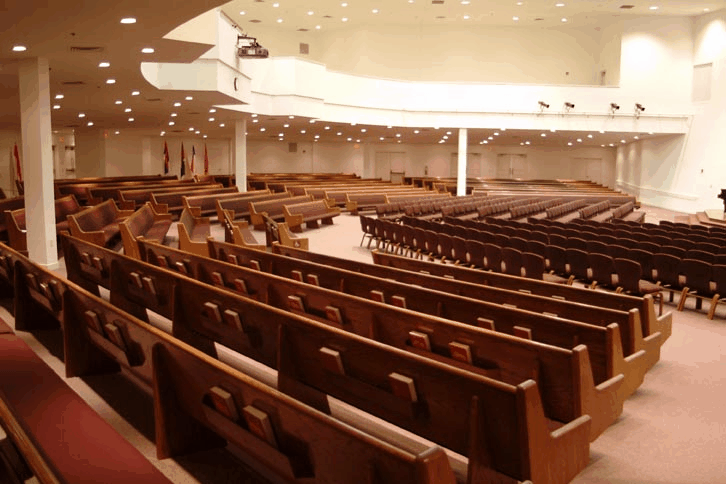
Color inconsistency across a sanctuary is almost always a refinishing problem, not a structural one.
Professional refinishing strips the old finish and stain uniformly across every pew, then applies a consistent, color-matched stain that brings the entire sanctuary back into visual harmony. This is also the opportunity to update the color — darkening light oak, refreshing dated tones — without a single board being replaced.
The replacement trap: Some churches respond to faded pews by replacing the most visibly affected ones, only to find that new pews never quite match the remaining originals. The only way to achieve true uniformity is refinishing — applied to every pew at once.
Joints Are Loose but the Wood Frames Are Intact
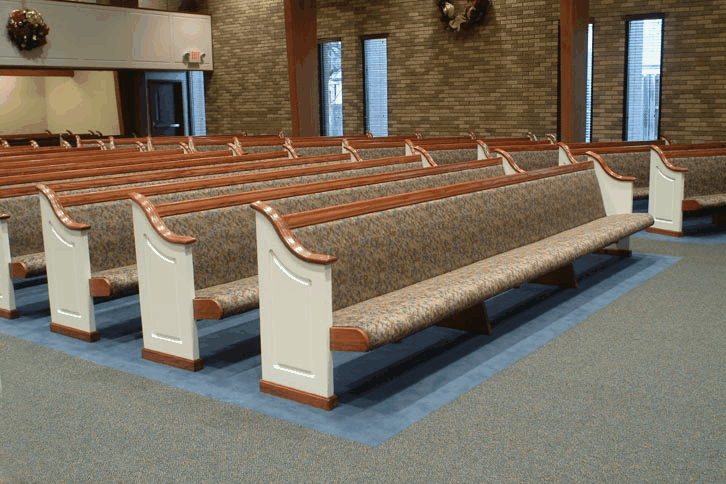
A pew that rocks slightly, creaks when sat in, or has a visible gap at a joint connection is often cited as evidence that it needs to be replaced. In practice, it is almost always evidence that it needs to be re-glued — a routine part of any professional refinishing project.
Wood joints fail over time because the original adhesive dries out, shrinks, and loses its bond. The wood itself has not failed. A skilled restoration craftsman disassembles the joint, cleans both surfaces, applies fresh adhesive, clamps the joint under pressure, and allows it to cure. The result is often stronger than the original factory joint.
- Rocking or wobbling when sat in — re-glue the base joints
- Creaking sound under movement — adhesive failure in the seat or back assembly
- Visible gap between end cap and seat — structural re-bonding needed
- Slight lean or twist in the pew body — base fasteners may need resetting
None of these conditions indicate a pew that has reached the end of its usable life. Each one is a specific, addressable repair that is performed as part of a comprehensive restoration — not a reason to spend on full replacement.
Surface Scratches, Scuffs, and Minor Gouges Are Widespread
Years of hymnals sliding across pew backs, belt buckles catching armrests, children's shoes scuffing the pew in front of them — all of it accumulates into a surface that looks comprehensively damaged when viewed from the congregation. Up close, however, most of this damage is limited to the finish layer and the very top surface of the wood. It has not penetrated deeply into the material.
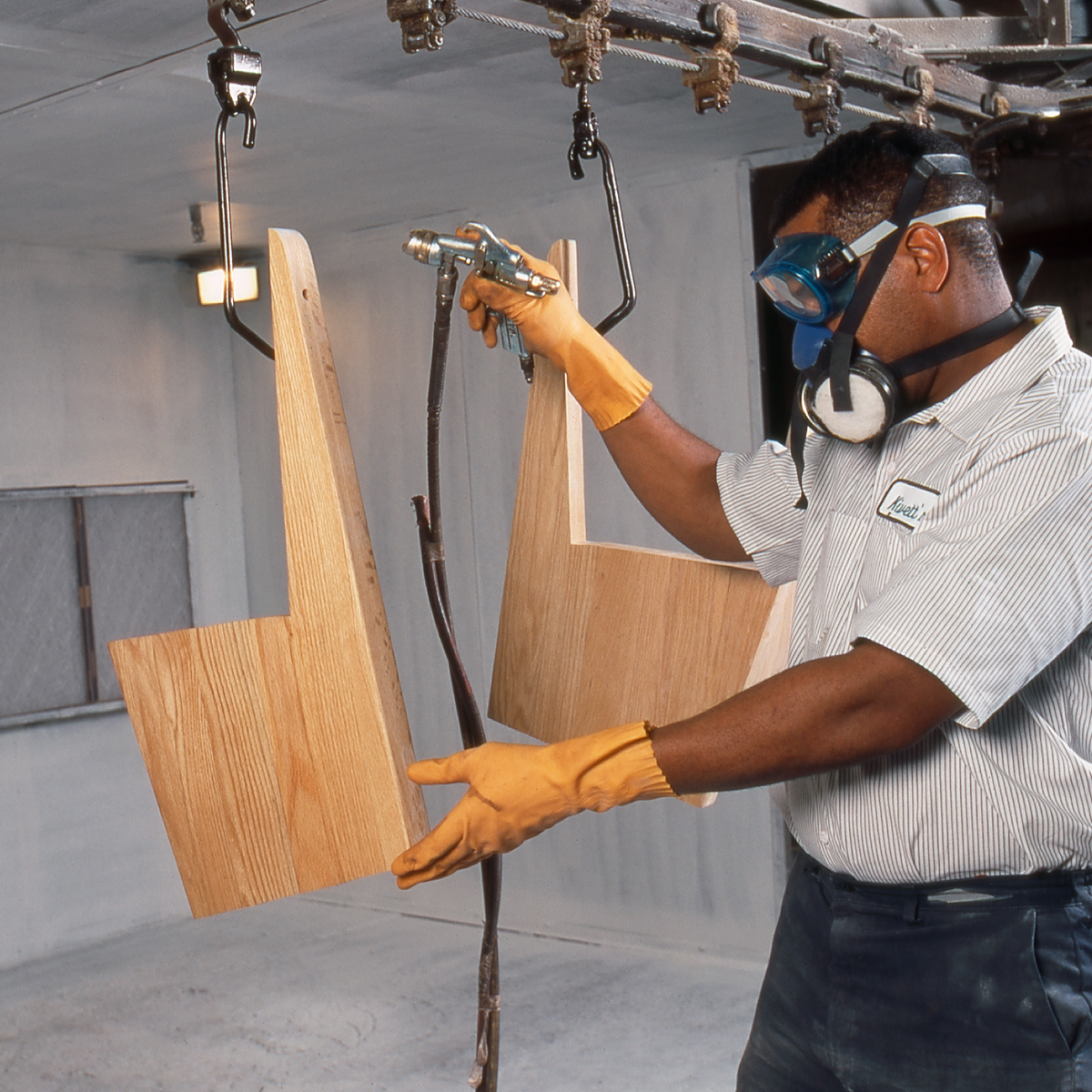
The sanding phase of professional refinishing removes this layer of accumulated surface damage entirely. Craftsmen work through progressively finer grits until the wood is smooth and clean, with all scratches, scuffs, and minor gouges eliminated. What looked like extensive damage from the congregation's vantage point disappears completely.
Deeper gouges — from impacts or cuts that have penetrated well below the surface — can often be filled with color-matched wood filler during the restoration process and become virtually invisible once the new finish is applied over them.
The rule of thumb: If the damage is in the surface and not through the wood — meaning you cannot feel a depression deeper than roughly 3–4mm when you press your fingernail across it — sanding will address it completely. Anything deeper is assessed case by case but is rarely a reason to replace the entire pew.
The Pews Look Old But Your Congregation Has a Deep History With Them
This sign is less about wood condition and more about something equally important: the irreplaceable value of continuity. Pews that have been in a sanctuary for forty, fifty, or seventy years carry the weight of every wedding, every funeral, every ordinary Sunday that has passed in that space. For many congregations, those pews are as much a part of the church's identity as anything else in the building.

Decades of worship, weddings, and community gather meaning in the pews that held them. That history is worth preserving.
Replacement erases that. New pews, however well-crafted, do not carry the same weight. And practically speaking, the wood in pews built in the mid-twentieth century was often sourced from old-growth forests. The grain is tight, the material dense and stable in ways that most commercially available new pew lumber simply is not.
When a church's pews are structurally viable and historically significant to the congregation, refinishing is not just the more economical choice — it is the more faithful one. Stewardship of the physical space means caring for what has been entrusted, not discarding it at the first sign of age.
The 5 Signs — At a Glance
Frequently Asked Questions
How do I know if my church pews need refinishing or replacement?
If the wood frames are structurally intact — no extensive rot, no broken frames, no severe warping — refinishing is almost certainly the better option. The signs above cover the most common scenarios. When in doubt, a professional on-site assessment will give you a clear, honest answer.
Is refinishing church pews really worth the investment?
Yes — in almost every case. Professional refinishing typically costs a fraction of replacement, preserves original wood quality, and extends pew life by decades. Many congregations find the restored result is more beautiful than anything they could buy new at a comparable price.
When do church pews actually need to be replaced?
Replacement makes sense when wood has extensive structural rot or decay, when frames are broken beyond practical repair, or when pews have suffered damage so severe that restoration would approach replacement cost. A professional assessment identifies which situation you are in before any money is spent.
Can only some pews be refinished while others are replaced?
Technically yes, but it is rarely recommended. Achieving color consistency between refinished original pews and new replacement pews is extremely difficult. For a uniform sanctuary appearance, refinishing all pews together produces the best result.
How long will refinished church pews last?
With proper maintenance and regular cleaning, professionally refinished pews typically hold their finish for fifteen to thirty years before another full refinishing is needed. Light maintenance — periodic cleaning with appropriate products — can extend that range significantly.
Not Sure Which Camp Your Pews Fall Into?
Let Kivett's come take a look. Our free on-site assessment gives you a clear, honest recommendation — refinish or replace — with no pressure and no obligation.
Schedule a Free Pew AssessmentTrusted by Congregations Nationwide
Hear from churches we have served and find us on the map.