


Church pews are among the most durable furnishings a congregation will ever own — but durability is not the same as invincibility. Even the finest solid wood pews, whether they are fifty years old or freshly refinished, require consistent, informed care to reach their full lifespan. The difference between pews that last thirty years and pews that last seventy is almost always maintenance.
Most church facilities teams want to do the right thing. The problem is that reliable, practical guidance on wood pew care is hard to find. This guide fills that gap. At Kivett's Fine Church Furniture, we have spent decades restoring pews that suffered not from old age but from well-intentioned but uninformed care. What follows is what we tell every client before we leave a completed restoration project — and what every church steward should know before picking up a cleaning cloth.
The Fundamentals: What Wood Pews Actually Need
Before getting into seasonal specifics, it helps to understand what wood pews are actually sensitive to — because most maintenance mistakes come from a misunderstanding of the material rather than negligence.
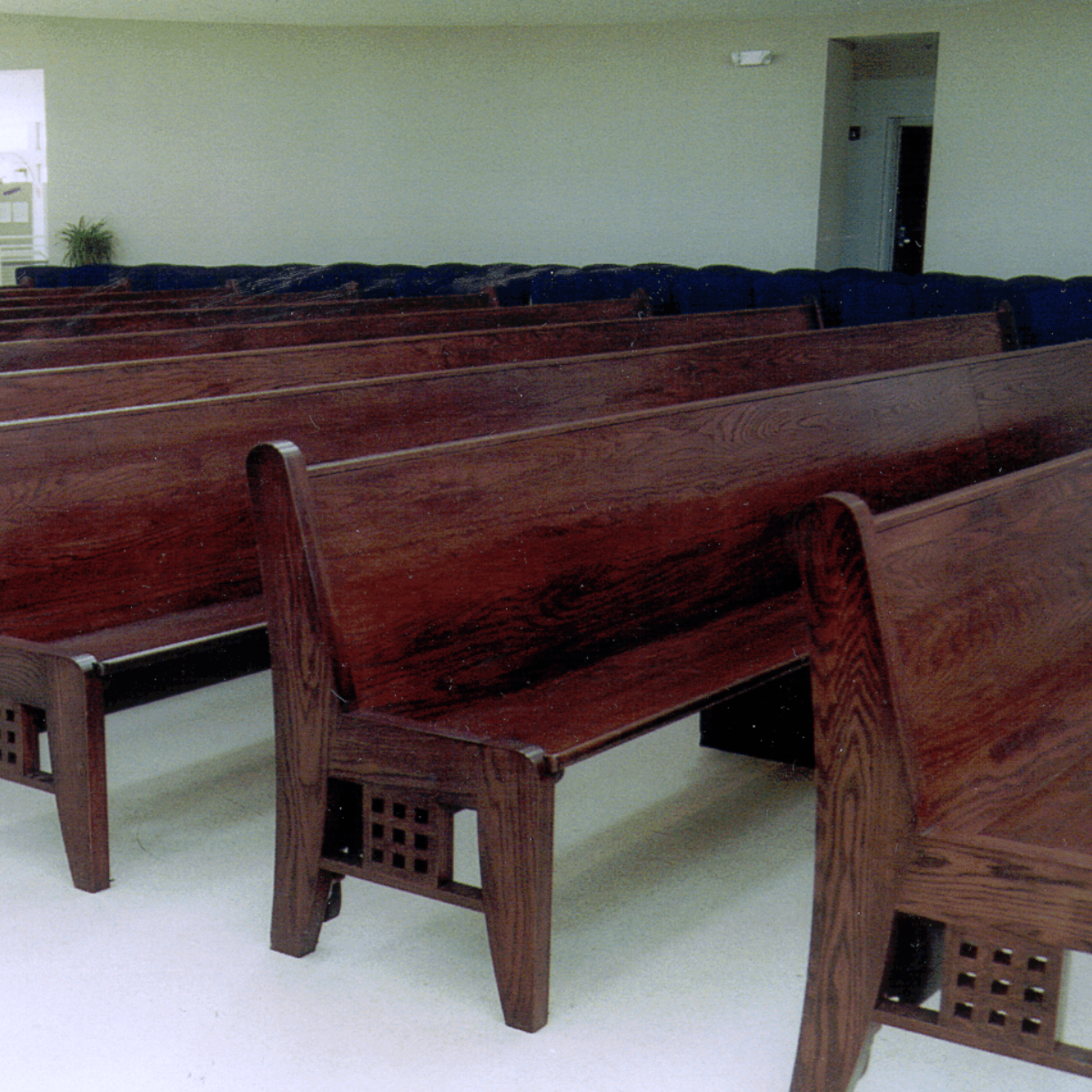
Finished wood pews have two layers that matter: the wood itself, and the finish coat that protects it. The finish — whether lacquer, varnish, polyurethane, or a waterborne topcoat — acts as a shield between the raw wood and the environment. Everything that shortens pew life does so by degrading this shield: chemical cleaners that dissolve it, moisture that penetrates through gaps in it, UV light that breaks down its molecular structure, and physical abrasion that wears it thin.
Good pew maintenance, therefore, has three goals: keep the finish chemically intact, keep the wood at stable moisture content, and minimize physical abrasion at high-contact points. Every specific recommendation in this guide flows from one of those three principles.
The most important rule in this entire guide: When in doubt about whether a cleaning product is safe for wood pews, do not use it. The cost of a damaged finish far exceeds the cost of buying the correct product. If your current cleaning supplies are not specifically labeled for use on finished wood furniture, replace them before the next cleaning.
Cleaning Correctly: The Products That Help and the Ones That Harm
Cleaning is the most frequent maintenance activity — and the one most likely to cause unintentional damage. The table below is the definitive reference for your facilities team. Post it in the supply closet, include it in your volunteer orientation, and review it any time a new cleaning product is introduced to the building.
A note on disinfecting: the pandemic era introduced many churches to the routine of spraying and wiping pews with sanitizing products. Most of these products — particularly bleach-based or high-alcohol sprays applied directly to wood — are damaging to wood finish. If sanitizing is required, use a product specifically rated safe for finished wood surfaces, apply it to the cloth rather than directly to the pew, and follow immediately with a dry wipe. Repeated direct application of any liquid to wood surfaces accelerates finish degradation significantly.
Below is a quick-reference product guide your team can use when evaluating what is already in your supply cabinet:
When in doubt, ask first. If your congregation has recently had pews professionally refinished by Kivett's, contact us before introducing any new cleaning product to the sanctuary. We are always glad to advise — and a quick email costs nothing compared to finish damage that requires early re-service.
A Season-by-Season Maintenance Calendar
Wood pews face different threats at different times of year. A maintenance calendar that accounts for seasonal conditions ensures your facilities team is always working with the environment rather than against it. Here is what to focus on in each season.
Spring
Summer
Fall
Winter
Climate Control: The Hidden Maintenance Variable
Of all the factors that affect pew longevity, climate control is the one most churches underestimate — and the one that, when managed correctly, delivers the greatest return. Wood is a hygroscopic material: it absorbs moisture from the air when humidity is high and releases moisture when humidity is low. Every cycle of expansion and contraction stresses the finish, the joints, and the grain of the wood itself.
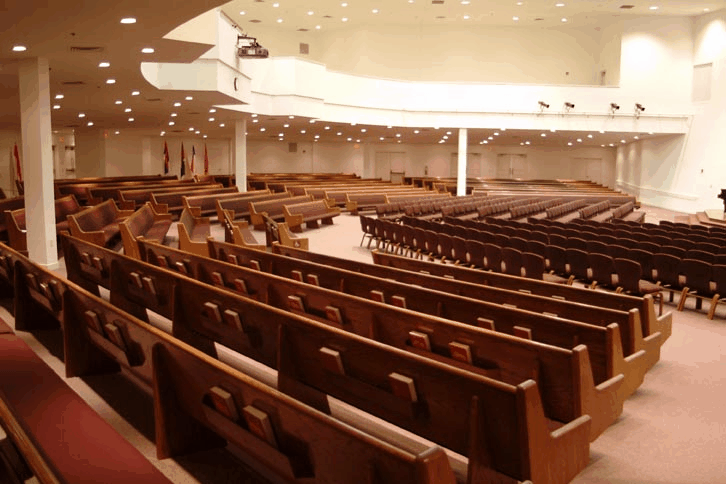
A full sanctuary of pews represents a significant investment — one that stable humidity and temperature protect far more effectively than any cleaning product.
The target range is 35% to 55% relative humidity, maintained consistently throughout the week — not just on service days. This is the most common and consequential mistake Kivett's observes in churches that run their HVAC only on weekends: the wood spends five days contracting in dry, cold air and then expands rapidly when the building is heated before Sunday services. Repeated over years, this cycle opens finish cracks, loosens joints, and checks the grain.
The practical solution is a programmable thermostat that maintains a reduced but consistent setback temperature and humidity through the week — warm enough to prevent moisture-damaging cold, and humidified enough to keep the wood stable. The energy cost of this approach is modest compared to the refinishing costs it defers.
A simple investment with a long return: A digital hygrometer — a small device that monitors humidity — costs under thirty dollars and can be placed on the back pew. Checking it once a week gives your facilities team the data to act before humidity swings cause damage. It is one of the highest-value pew maintenance tools available.
Protecting Against UV and Sun Damage
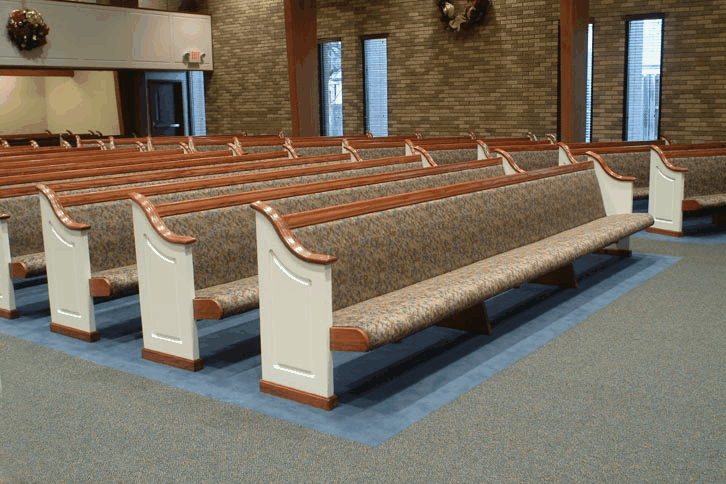
UV exposure is the most aggressive environmental force acting on your pew finish year-round. It breaks down the chemical bonds in topcoat formulations, causes wood pigments to oxidize, and produces the faded, chalky, uneven color that is one of the most visible signs of an aging sanctuary. The damage is cumulative, largely invisible until it becomes severe, and impossible to reverse without professional refinishing.
The two most effective interventions are window film and strategic use of interior shading. UV-filtering window film, applied to south- and west-facing windows, blocks the majority of UV radiation while remaining nearly invisible from the interior. It does not significantly alter the appearance of stained glass when viewed from the congregation and requires no structural modification to install. For churches with significant stained glass, a professional window film installer can select film products that do not interfere with the glass's appearance or integrity.
Interior shading — blinds, curtains, or liturgical draperies that can be partially closed during weekday hours when the sanctuary is empty — provides additional protection at no cost. UV damage does not require a congregation to be present; it accumulates every hour sunlight falls on unprotected wood surfaces. Shading empty-sanctuary windows during peak sun hours on weekdays can significantly extend finish life in high-UV sections.
For sanctuaries where UV damage is already visible — with faded pews near windows and darker pews in shaded areas — this is a pattern that will only widen over time without intervention. A professional assessment can determine whether the current disparity is purely cosmetic or has progressed to finish-layer damage requiring professional attention.
The Annual Inspection Checklist
Once per year — ideally in the fall before the busy holiday season — your facilities team or building committee should conduct a formal pew inspection using the checklist below. This takes thirty to forty-five minutes in a typical sanctuary and provides the documentation needed to catch early-stage problems, track changes year over year, and make informed decisions about when to schedule professional service.
Photograph each flagged item and keep a running log by pew row and section. Over time, this record becomes an invaluable resource for planning and budgeting.
-
Finish wear at armrests and seat edges Look for bare wood visible through worn finish — the first sign that protective coating is failing
-
Color consistency across the sanctuary View from the rear of the sanctuary — note any visible color difference between window-adjacent and shaded pews
-
Finish crazing or surface cracking Fine networks of cracks visible across pew surfaces indicate finish stress — often from humidity fluctuation
-
Joint stability Sit in and shift in each pew section — note any rocking, creaking, or visible joint gaps
-
End cap and panel condition Check pew ends for cracks, separation from the body, or missing pieces
-
Hardware and fastener inspection Check for protruding screws, rusting hardware, or split wood around fastener points
-
Kneeler rail condition Inspect kneeling rails for finish wear, structural attachment, and padding condition if upholstered
-
Surface scratches and scuffs Note concentration and depth — light scuffs in finish are maintenance concerns; deep gouges reaching bare wood need professional attention
-
Moisture staining or dark spots Dark discoloration on bare or thinly finished wood indicates moisture penetration — address promptly
Call for Professional Service Immediately If You Find:
- Finish peeling or flaking away from the wood surface in sections
- Bare wood that is soft, spongy, or darkly stained — signs of moisture penetration and possible decay
- A pew frame that feels structurally unstable or leans under normal pressure
- Any crack or split running with the grain more than six inches in length
- Evidence of mold or mildew on or beneath pew surfaces
Training Your Cleaning Team and Volunteers
The most thorough maintenance guide in the world does no good if the people who clean the sanctuary every week are using the wrong products or techniques. Training your facilities staff and cleaning volunteers is as important as any other step in this guide — and it is often the most overlooked.
A brief, one-page cleaning protocol posted in the supply closet is the single most effective training tool available. It should list approved products, approved tools, and a short list of items that are never to be used on wood pews — with no exceptions. Laminate it, affix it at eye level, and review it with any new volunteer before their first cleaning session.
It also helps to brief whoever handles building supply purchasing. Many product errors originate not at the cleaning stage but at the procurement stage — a well-meaning administrator buys a bulk cleaner that is never checked against the approved list. Giving your purchasing contact the same reference sheet eliminates this route of error.
Finally, establish a clear escalation path: what should a cleaning volunteer do if they notice damage, a loose joint, or a condition they have not seen before? The answer should be to notify a named person — not to attempt a repair themselves. Well-intentioned touch-up attempts using hardware-store products can cause damage that is significantly more difficult to address professionally than the original condition would have been.
A practical protocol outline for your supply closet: (1) Dry microfiber wipe — every service. (2) Barely-damp wipe for residue — cloth only, dry immediately after. (3) Approved wood cleaner — monthly or as needed. (4) Nothing else. If unsure, stop and ask. Do not improvise on wood surfaces.
When Maintenance Is Not Enough: Knowing When to Call
Consistent maintenance dramatically extends the life of your pews — but it does not eliminate the eventual need for professional attention. The goal of everything in this guide is to push that need as far into the future as possible, and to ensure that when professional service is needed, the wood is in the best possible condition to respond to it.
A good rule of thumb: schedule a professional inspection every five to ten years, regardless of how well the pews appear to be holding up. An experienced craftsman sees things a building team cannot — early-stage finish thinning, micro-cracking not yet visible to the untrained eye, joint movement that has not yet progressed to a creak. Catching these conditions early means lighter interventions. Deferring always means heavier ones.
Kivett's Fine Church Furniture offers free on-site pew assessments for congregations throughout the country. Whether your pews were refinished five years ago or have not been professionally evaluated in decades, we are glad to take a look and give you an honest picture of where they stand and what, if anything, they need.
The Steward's Four Pillars of Pew Care
Frequently Asked Questions
How do you clean wood church pews properly?
Weekly, use a dry microfiber cloth to remove dust and surface debris. For stickier residue, use a cloth that is barely dampened — never wet — and dry the surface immediately. For deeper cleaning, use a product specifically labeled for finished wood furniture. Never use silicone polishes, ammonia sprays, bleach, or all-purpose household cleaners on wood pew surfaces.
What cleaning products should never be used on church pews?
Pledge and all silicone-based aerosol polishes, Windex and ammonia-based cleaners, Clorox and Lysol wipes or sprays, citrus-oil cleaners, bleach solutions, and any wet mop or soaking cloth applied to wood surfaces. Each of these degrades wood finish over time — some immediately, some gradually, all inevitably.
How does humidity affect wood church pews?
Wood absorbs moisture from humid air and releases it in dry conditions — expanding and contracting with every humidity cycle. Over years, this movement cracks and crazes the finish, loosens joints, and checks the grain of the wood. Maintaining sanctuary humidity between 35% and 55% year-round, using a humidistat to monitor, is one of the most effective maintenance steps a church can take.
How often should church pews be professionally inspected?
A professional inspection every five to ten years is recommended even for well-maintained pews. An experienced craftsman identifies early-stage finish thinning, micro-cracking, and joint movement that building staff may not recognize — and early identification means lighter, less costly interventions.
What is the best way to protect church pews from sun damage?
Install UV-filtering window film on south- and west-facing windows near pew sections. This film is nearly invisible, does not significantly alter the appearance of stained glass from inside, and dramatically slows UV degradation of wood finish. Shading empty-sanctuary windows on weekdays during peak sun hours provides additional protection at no cost.
Want an Expert Eye on Your Pews Before the Next Holiday Season?
Kivett's Fine Church Furniture offers free on-site pew assessments nationwide. We will tell you honestly where your pews stand — and exactly what they need.
Schedule a Free AssessmentTrusted by Congregations Nationwide
Hear from churches we have served and find us on the map.