


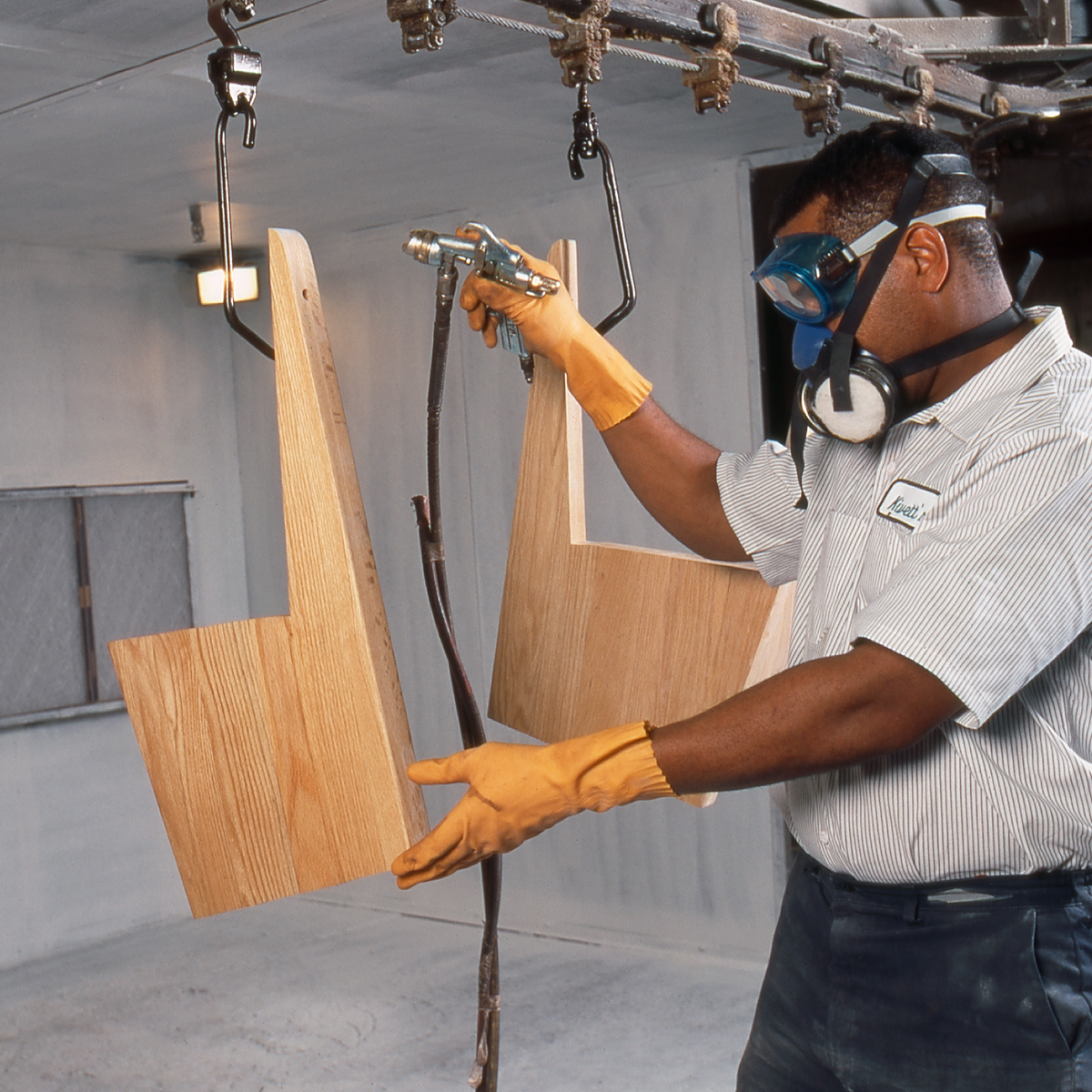
After a professional pew refinishing project, the most common question church leadership asks is a simple one: how long will this last? It is also one of the most important — because the answer shapes how you budget, how you schedule future maintenance, and how your congregation cares for its sanctuary in the years between professional service visits.
At Kivett's Fine Church Furniture, we have completed refinishing projects in sanctuaries that lasted well over twenty-five years before needing attention again — and we have seen others show meaningful wear within a decade. The difference almost never comes down to the quality of the original refinishing work. It comes down to what happens in the sanctuary afterward.
The Honest Answer: 15 to 30 Years — With Conditions
Professionally refinished church pews, when the work is done correctly and the finish is properly maintained, typically hold up well for fifteen to thirty years before a full re-strip and refinish is warranted. That is a wide range — and it is an honest one, because finish longevity is genuinely variable depending on factors specific to each sanctuary.

A small rural congregation that worships twice a week in a climate-controlled sanctuary and cleans its pews properly can realistically expect the upper end of that range — twenty-five to thirty years — before another full project is needed. A large urban church with hundreds of attendees at multiple services each weekend, south-facing windows flooding the front pews with UV light, and volunteer cleaners using whatever spray is under the kitchen sink may see meaningful wear in ten to fifteen years.
Neither outcome reflects a failure of the refinishing work itself. Both reflect the realities of use, environment, and care. Understanding which variables apply to your sanctuary puts you in a position to actively manage them — and significantly extend the life of your investment.
The midpoint option: Many churches benefit from a professional screen-and-recoat service at the ten-to-fifteen-year mark — a lighter process that scuffs the existing finish and applies fresh topcoat without a full strip. This can add another ten or more years of life and costs considerably less than a full refinishing. Ask your Kivett's representative whether this makes sense for your timeline.
What Shortens — and What Extends — Finish Life
The variables that determine where your refinishing project falls in that fifteen-to-thirty-year range are identifiable and, in most cases, actionable. Here is a clear breakdown of the factors that work for and against your finish over time.
| Factor | Effect on Finish Life | What You Can Do |
|---|---|---|
| Weekly attendance volume | Shortens | More contact means faster wear at high-touch points — schedule inspections more frequently |
| Direct UV / sunlight exposure | Shortens | Install UV-filtering window film on south- and west-facing windows near pews |
| Humidity swings (seasonal or HVAC-related) | Shortens | Maintain sanctuary humidity between 35–55% year-round with a humidistat |
| Improper cleaning products | Shortens | Use only wood-appropriate cleaners; eliminate silicone polishes and ammonia sprays |
| Proper cleaning routine | Extends | Dry microfiber wipe-downs weekly; no excess moisture on wood surfaces |
| Stable indoor climate | Extends | Consistent temperature and humidity reduces wood movement and finish stress |
| Prompt attention to minor damage | Extends | Small chips and worn patches addressed early prevent moisture from penetrating |
| Midpoint screen-and-recoat service | Extends | A lighter professional service at 10–15 years can add a decade to full refinishing intervals |
The Maintenance Routine That Protects Your Investment
The single most impactful thing a congregation can do after a pew refinishing project is establish a consistent, correct cleaning routine and stick to it. More pew finishes are damaged by well-intentioned but incorrect cleaning than by any other single factor in the post-refinishing period.
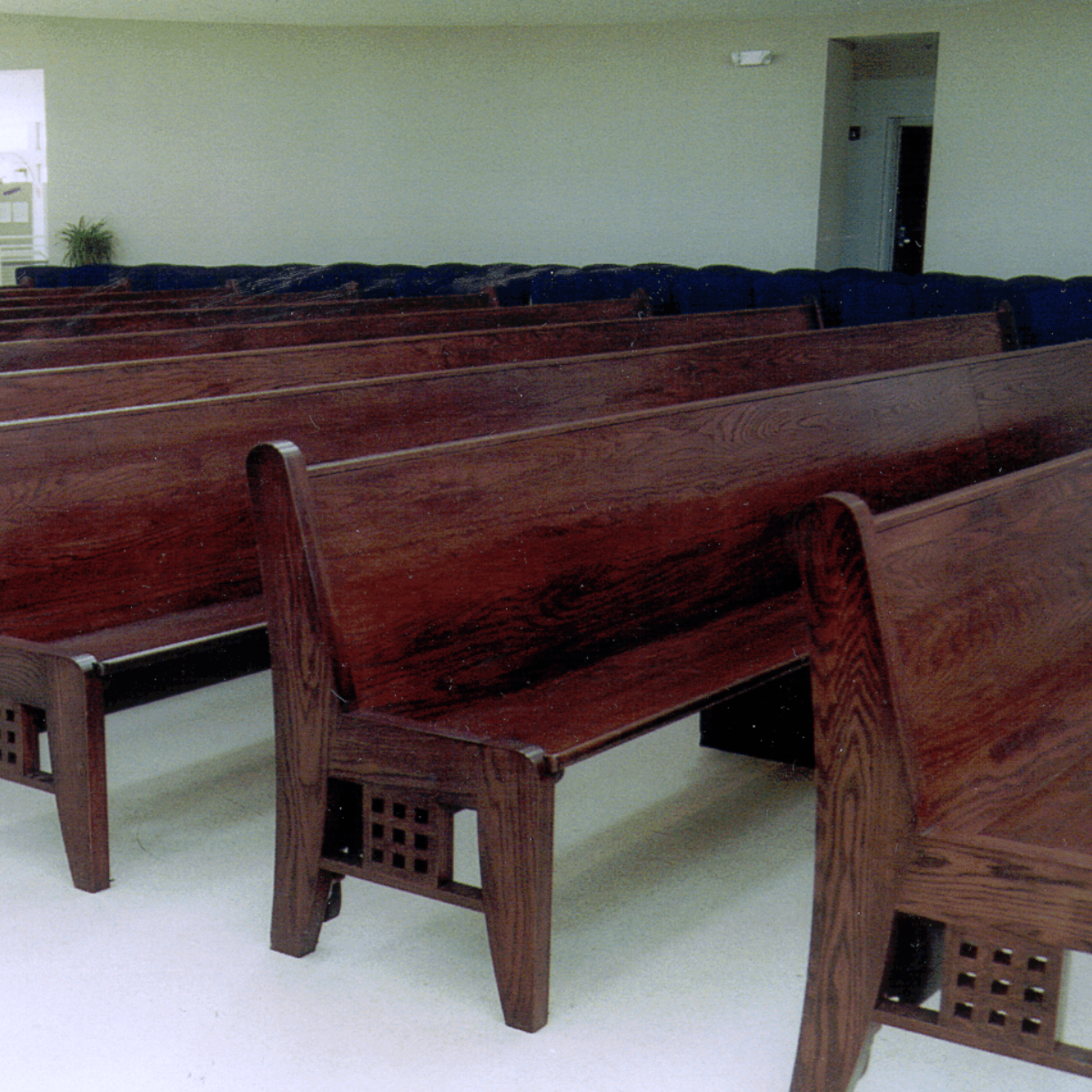
Here is what correct pew maintenance looks like in practice. Weekly, pews should be wiped down with a dry microfiber cloth to remove dust, skin oils, and surface debris. If a slightly damp cloth is needed for a sticky residue, it should be barely dampened — never wet — and the surface should be dried immediately afterward.
Monthly, a more thorough inspection of high-contact areas — armrests, seat edges, kneeler rails — should be completed by whoever manages building care. Any spot where bare wood is beginning to show through the finish should be reported for professional attention before moisture has a chance to penetrate.
Annually, the entire sanctuary should be walked with fresh eyes, ideally with photographs taken from the congregation's vantage point. Areas of accelerated wear, color inconsistency, or finish crazing that might be invisible up close often become apparent when viewed from a distance.
Products to avoid without exception: Silicone-based furniture polishes, Pledge or similar aerosol sprays, all-purpose household cleaners, bleach or disinfectant sprays applied directly to wood, and any cleaner containing ammonia or citrus solvents. All of these degrade wood finish — some immediately, some gradually, all inevitably.
Your Pew Care Calendar: What to Do and When
A simple, structured maintenance calendar takes the guesswork out of pew care and ensures that small problems are caught before they become expensive ones. Here is what Kivett's recommends for sanctuaries that have recently been refinished:
Dry Wipe-Down
Microfiber cloth wipe of all pew surfaces after services. Remove bulletins, pew cards, and any debris left between pews. No cleaning products required — dry removal of dust and oils is sufficient and safe.
Contact-Point Inspection
Check armrests, front seat edges, tops of pew backs, and kneeler rails for early finish wear. These are the first areas to thin. Note any spots where bare wood is visible and flag for professional review.
Humidity & Climate Check
Confirm that sanctuary humidity is holding between 35% and 55%. Check for any new joint separation, cracking along the grain, or finish crazing — signs that humidity fluctuations are stressing the wood. Adjust HVAC or humidification accordingly.
Full Sanctuary Walk-Through
Photograph the sanctuary from multiple vantage points. Review high-UV areas near windows for accelerated fading. Confirm that cleaning products in use are still appropriate. Update the building team on any protocol changes.
Professional Inspection
Schedule a Kivett's on-site assessment. A professional eye catches early-stage damage — thinning finish, minor joint movement, UV degradation — that building staff may not recognize. This is also when a screen-and-recoat service may be recommended.
Screen-and-Recoat (If Needed)
A lighter professional service that scuffs the existing finish and applies fresh topcoat throughout. No stripping required. Extends the life of the original refinishing significantly and costs considerably less than a full project.
Full Refinishing (When Warranted)
A complete strip, repair, stain, and refinish cycle brings pews back to like-new condition. With proper maintenance in the years prior, the wood will be in excellent shape and the project straightforward. Without it, deeper damage may require more extensive repair work.
The Role of the Sanctuary Environment
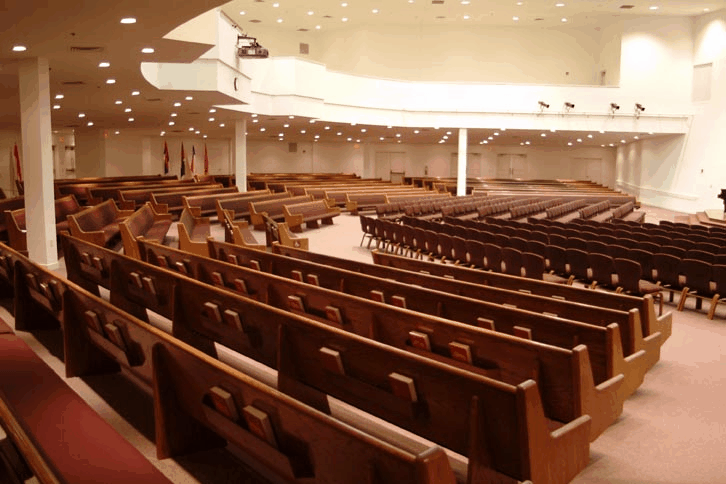
Sanctuaries with significant window exposure face accelerated UV degradation on pews closest to the glass.
Beyond cleaning and direct maintenance, the environment in which your pews exist has an enormous influence on finish longevity. Two sanctuaries with identical pews, refinished at the same time with the same products, can see dramatically different results over a decade simply because of differences in their physical environment.
UV exposure is the most aggressive environmental factor. Pews within fifteen feet of unshaded south- or west-facing windows can show visible fading and finish degradation in as few as five years, while pews in the shaded interior of the same sanctuary look untouched at fifteen. Window film rated for UV rejection is one of the most cost-effective investments a church can make to protect its pew refinishing. Many films are nearly invisible and do not significantly alter the appearance of stained glass when viewed from inside.
Humidity is the second major variable. Sanctuaries that are empty and unheated through the week, then warmed rapidly before Sunday services, subject wood to repeated cycles of contraction and expansion. Over years, this stresses finish adhesion, opens micro-cracks in the topcoat, and loosens joints that were sound after refinishing. Running the HVAC system on a reduced but consistent schedule through the week — rather than turning it off entirely — costs modestly more in energy but can extend finish life by years.
- Install UV-filtering window film on south- and west-facing windows near pew sections
- Maintain consistent HVAC through the week — avoid full shutdowns between services
- Keep humidity between 35% and 55% using a humidistat to monitor actively
- Avoid placing space heaters directly in front of pew sections — forced dry heat accelerates wood moisture loss
- Ensure HVAC vents do not blow directly onto pew surfaces at close range
Early Warning Signs: When to Call Before the Schedule Says So
Even with a sound maintenance calendar, certain conditions warrant professional attention regardless of where you are in the timeline. Catching these early almost always means a simpler, less costly intervention — rather than waiting until damage has progressed to a point that requires full re-strip work.
Call for a professional assessment — regardless of your maintenance schedule — if you observe any of the following:
- Bare wood visible at armrests or seat edges with no finish remaining
- Finish peeling, flaking, or lifting away from the surface
- Deep crazing — a dense network of cracks visible across large surface areas
- New joint movement, rocking, or creaking that was not present after refinishing
- Dark staining on bare wood indicating moisture has already penetrated
Any of these conditions means the protective barrier has been compromised. The longer bare or damaged wood is left exposed, the deeper moisture and oils penetrate — and the more aggressive the sanding required to reach clean wood when the next professional service is performed. Early calls save money; deferred calls cost more.
A Final Word on Getting the Most From Your Refinishing Investment
Professional pew refinishing is a significant investment — one that your congregation deserves to see protected for as long as possible. The good news is that the factors most within your control — cleaning products, climate management, and prompt attention to early wear — have an enormous influence on how long your finish lasts.
At Kivett's, we do not just complete a project and move on. We provide every client with specific guidance on maintaining their pews based on their particular wood species, finish type, and sanctuary environment. If you have questions about maintaining pews that Kivett's has previously refinished, or if you would like a professional inspection to assess where your current finish stands, we are always glad to help.
Contact us to schedule a pew inspection or maintenance consultation →
Key Takeaways at a Glance
Frequently Asked Questions
How long does church pew refinishing last?
Professionally refinished church pews typically hold their finish for 15 to 30 years. The range reflects real differences in congregation size, cleaning practices, UV exposure, and climate control. With proper maintenance, the upper end of that range is achievable in most sanctuaries.
How do you maintain church pews after refinishing?
Weekly dry microfiber wipe-downs, monthly inspection of high-contact areas, and seasonal humidity checks are the foundation. Use only cleaners specifically formulated for finished wood — never silicone polishes, ammonia sprays, or household all-purpose cleaners on wood surfaces.
How often should church pews be professionally refinished?
Most churches should plan for a professional inspection every 5 to 10 years and a full refinishing every 15 to 30 years. A lighter screen-and-recoat service at the 10–15 year mark can add significant life between full refinishing projects.
What is a screen-and-recoat and how is it different from full refinishing?
A screen-and-recoat lightly abrades the existing finish surface and applies fresh topcoat — no stripping or staining required. It refreshes the protective layer and appearance at a fraction of the cost of full refinishing, and is ideal when the existing finish is still largely intact but showing early signs of wear.
Does UV exposure really shorten pew finish life that much?
Yes — significantly. Pews within direct sunlight near unshaded windows can show measurable fading and finish degradation in five years or less, while shaded pews in the same sanctuary look much better at fifteen. UV-filtering window film is one of the most cost-effective protective investments a church can make.
Wondering How Your Current Pews Are Holding Up?
Kivett's offers free on-site pew assessments — whether you had your pews refinished five years ago or fifty. Let us take a look and give you an honest picture.
Schedule a Free AssessmentTrusted by Congregations Nationwide
Hear from churches we have served and find us on the map.