


Ask most church administrators what their pews are made of and the answer is usually something like "wood" or "a dark brown wood." That is understandable — wood species identification is not part of most people's training. But for a professional restoration craftsman, the species in your pews is one of the first and most important pieces of information in planning any refinishing project.
Different woods behave in fundamentally different ways when they are stripped, sanded, stained, and finished. A technique that produces a flawless result on white oak can leave blotchy, uneven color on cherry. A stain that reads as warm amber on maple turns almost orange on pine. The grain structure, natural color, hardness, and porosity of each species require different preparation methods, different products, and different craftsmanship approaches to achieve a result that is consistent, beautiful, and durable.
At Kivett's Fine Church Furniture, identifying the wood species in your pews is a standard first step in every on-site assessment. Here is what we look for — and why it matters for your project.
Why Wood Species Is the Starting Point for Every Restoration Decision
A church pew refinishing project is not a single process applied uniformly to all wood — it is a series of decisions, each shaped by the characteristics of the specific material being worked. Species determines how aggressively the wood can be sanded without damage, how deeply the grain needs to be filled before finish is applied, how readily it accepts stain color, and how that color will shift over time as the wood continues to age naturally.
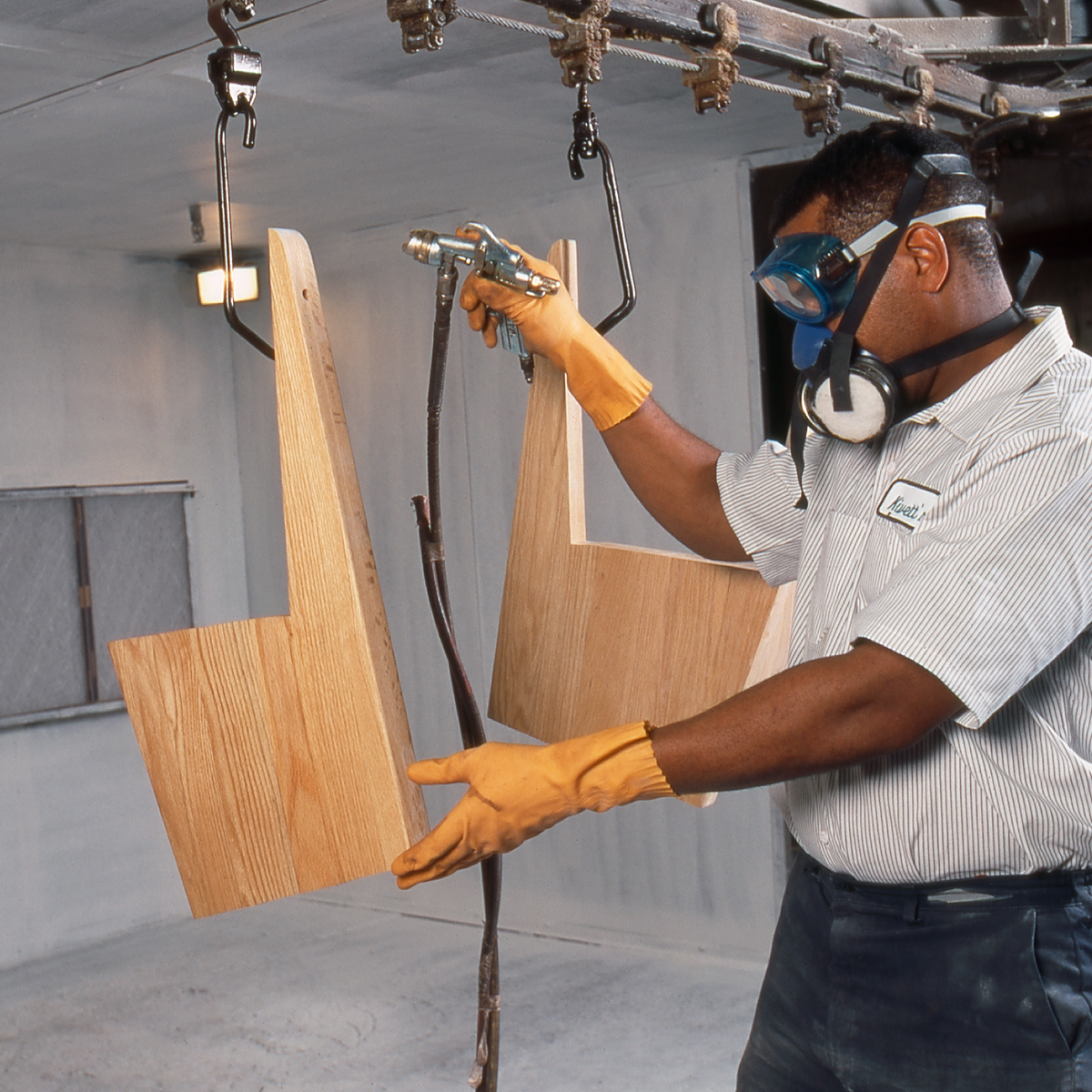
It also shapes the color-matching process when only a portion of the sanctuary's pews are being restored, or when a new pew end needs to be fabricated to replace a damaged one. Matching stain color is not simply a matter of choosing a paint chip — the same stain applied to two different species will produce two different final colors because each wood's natural tone underlies the applied color.
Beyond staining, species affects structural repair decisions as well. Harder, denser woods like oak and maple hold joinery more reliably and are more forgiving of re-gluing. Softer or more porous species may require different adhesives or reinforcement strategies to achieve the same joint strength.
The most important principle: There is no such thing as a one-size-fits-all approach to church pew restoration. Every species requires its own preparation strategy, product selection, and finishing sequence. An experienced craftsman recognizes this immediately — and adjusts accordingly.
Oak: The Most Common Church Pew Wood in America
White Oak & Red Oak
Oak is by far the most common wood found in American church pews, particularly those built between 1900 and 1980. Both white oak and red oak are extremely hard, dimensionally stable, and highly durable — qualities that made them the practical choice for commercial furniture production throughout most of the twentieth century.
For restoration purposes, oak is forgiving and predictable. Its open grain structure accepts stain readily and evenly, making color matching across an entire sanctuary relatively straightforward. The pronounced grain pattern also means that minor color variation from pew to pew, once the stain is applied, reads naturally as wood character rather than inconsistency.
The primary restoration consideration with oak is grain filling. Oak's open pores, if not properly filled before finish application, will result in a surface that looks and feels slightly rough — like viewing the finish through a screen rather than a sheet of glass. A professional craftsman will apply grain filler as a preparation step, ensuring a smooth, flat foundation for the topcoat that gives oak pews their characteristic depth and richness.
Black Walnut: The Premium Choice With Distinctive Character
Black Walnut
Black walnut is among the most beautiful and distinctive woods used in fine church furniture. Its naturally rich, dark chocolate-to-purple-brown tone and flowing grain pattern give walnut pews an unmistakable warmth and elegance. Churches that chose walnut for their original pew installation made a significant investment — and restoration preserves that investment rather than discarding it.
The primary challenge with walnut restoration is that the wood's natural color is itself a strong design statement. Applying stain to walnut does not simply add color the way it does with lighter woods — the stain interacts with walnut's own deep base tone, and the result can shift significantly depending on the stain product and application method used. Lightening walnut is particularly difficult, as its natural pigments resist attempts to move significantly toward lighter tones.
Walnut restoration note: Walnut is susceptible to a phenomenon called "steaming" during certain drying and processing methods, which can mute its natural color variation. Well-restored walnut pews, stripped back to raw wood and allowed to express their natural grain before a clear or lightly tinted topcoat is applied, often look dramatically more beautiful than their owners expected.
When color matching walnut for repairs or replacement pieces, the natural variation within walnut — which ranges from pale sapwood at the edges to very dark heartwood at the center — requires careful material selection and expert matching to achieve visual consistency across a restored sanctuary.
Cherry: The Wood That Keeps Changing — Even After Refinishing
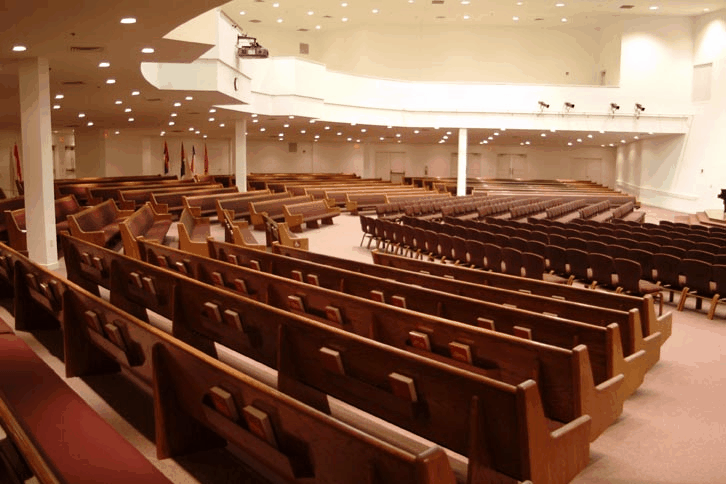
The warm, reddish-amber tone of aged cherry deepens further over time — a characteristic that makes color matching a specialized skill.
American Cherry
Cherry is one of the most beautiful and most challenging woods to restore correctly. Its fine, closed grain produces a smooth, almost silky surface that finishes elegantly — but its notorious tendency to blotch under direct stain application means that the preparation and conditioning phase of refinishing requires extra care and experience.
The more significant challenge unique to cherry is its dramatic natural aging. Fresh cherry is a pale, pinkish-tan color. Exposed to light over years and decades, it deepens into the rich, warm reddish-amber that most people associate with the wood. When a sanctuary's cherry pews are stripped back to raw wood during refinishing, they temporarily return to that pale initial tone — and then begin aging again from the start.
This means that achieving color consistency in a sanctuary with cherry pews that have been aging for thirty years requires careful stain selection to approximate where the wood was in its color development, rather than simply matching the raw wood. An experienced restorer accounts for where the cherry will continue aging after refinishing, so that the finished result stays consistent as the wood matures again in the years following the project.
Hard Maple and Pine: The Opposite Ends of the Spectrum
Hard Maple
Hard maple's extreme density and very fine, closed grain make it one of the most difficult woods to stain evenly. Direct stain application almost always results in blotching. Professional restorers working with maple use wash coats and specialized conditioners before stain to open the grain uniformly, and often rely more heavily on tinted topcoats than penetrating stains for color. When done correctly, maple produces a beautifully smooth, consistent surface — but it requires a craftsman who knows its quirks.
Southern Yellow Pine
Pine is soft relative to hardwoods and highly resinous — meaning its natural resins can bleed through finish coats if not properly sealed first. Its pronounced grain also absorbs stain very unevenly between the light earlywood and dark latewood bands, making uniform color difficult to achieve. However, pine pews with a clear or very lightly tinted finish that allows the natural grain to show can be genuinely beautiful — and restoration that leans into rather than fights the wood's character often produces the most pleasing results.
Quick Reference: How Common Church Pew Woods Compare
The table below summarizes how the most common church pew species compare across the key factors that affect a restoration project. Use it as a starting point — but remember that within any species, the age of the wood, how it was originally finished, and how it has been maintained all add additional layers of complexity that only an on-site assessment can fully account for.
| Species | Hardness | Stain Behavior | Color Stability | Restoration Notes |
|---|---|---|---|---|
| White Oak | Very Hard | Even, predictable | Stable | Grain filling required; excellent candidate |
| Red Oak | Hard | Even; slightly more porous | Stable | Similar to white oak; slightly more open grain |
| Black Walnut | Moderately Hard | Good; color-complex | Moderate shift | Natural tone dominant; lightening is difficult |
| American Cherry | Moderately Hard | Blotch-prone; needs conditioner | Darkens significantly | Aging must be factored into stain selection |
| Hard Maple | Very Hard | Very difficult; blotches easily | Very stable | Wash coat essential; tinted topcoat often preferred |
| Yellow Pine | Moderate | Very uneven; resin issues | Moderate shift | Seal resin first; clear finish often most effective |
Not sure what species your pews are? You are not alone — many churches have no documentation from the original installation. During a Kivett's on-site assessment, our craftsmen identify species from grain pattern, color, weight, and construction details before recommending any restoration approach. Guessing the species and proceeding without confirmation is a shortcut that can produce poor results.
Updating Your Pew Color: What Species Will and Won't Allow
One of the most common questions Kivett's receives during an initial consultation is whether the congregation can use the refinishing project as an opportunity to update the color of their pews. The answer is almost always yes — but the degree of change achievable depends heavily on the species being worked.
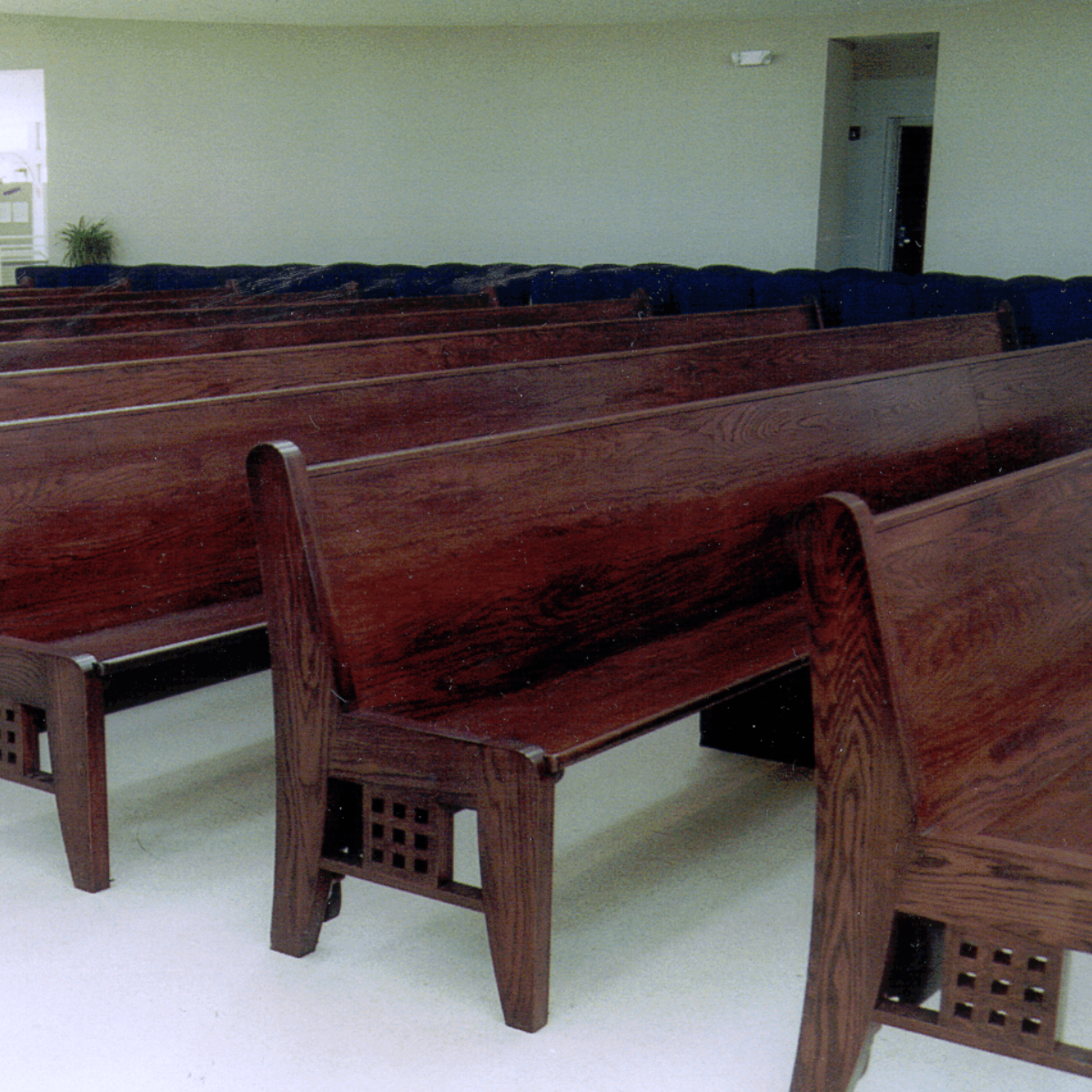
Woods with a pale natural base color — maple, lighter oak, pine — can be moved toward darker tones relatively easily. Staining them darker is a matter of product selection and application technique. Moving them lighter, however, is far more difficult — bleaching wood is technically possible but rarely produces the clean, even result most clients are hoping for.
Woods with a strong natural color — walnut's deep chocolate, cherry's developing amber — are more resistant to dramatic color changes in either direction. These species are better served by finishes that celebrate their natural tone rather than fight it. A skilled craftsman can nudge the color warmer or cooler, but dramatic departures from the wood's natural expression are rarely successful.
Oak — the most common church pew species — sits in the middle. Its relatively neutral natural tone and excellent stain acceptance make it one of the more flexible species for color updates during refinishing. Darkening to walnut-adjacent tones, warming toward amber, or even moving toward gray or driftwood finishes are all achievable with the right preparation.
- Going darker: Achievable on nearly all species with appropriate stain products and preparation
- Going lighter: Difficult on most species; bleaching required and results are variable
- Changing tone (warm to cool or vice versa): Possible on oak and maple; more limited on walnut and cherry
- Matching new wood to old: Always requires an experienced professional — species, age, and ambient light all affect how color reads once installed
The Right Approach Starts With the Right Assessment
Understanding the species in your pews is not just academic — it is the foundation on which every good restoration decision is built. The right preparation method, the right stain products, the right topcoat system, and the right color strategy all flow from an accurate species identification and a thorough evaluation of the wood's current condition.
At Kivett's Fine Church Furniture, species identification and material evaluation are built into every on-site assessment at no charge. Whether your sanctuary holds white oak pews from 1950, walnut pews from a custom installation in the 1970s, or pine pews in a country church that have been quietly aging for a century, our craftsmen approach the work with the knowledge and respect your pews deserve.
The Five Species — At a Glance
Frequently Asked Questions
What kind of wood are church pews typically made of?
The most common species in American church pews are white oak, red oak, black walnut, American cherry, hard maple, and southern yellow pine. Oak is by far the most prevalent, particularly in churches built between 1900 and 1980. The species used often reflects the era of construction, regional availability, and the budget of the original installation.
Does wood species really change how church pews are refinished?
Significantly. Species determines sanding approach, grain filling requirements, stain product selection, conditioning needs, and topcoat strategy. The same technique applied to oak and cherry will produce entirely different results — one excellent, one potentially blotchy and uneven. An experienced craftsman adjusts every step of the process to the specific species being worked.
Can church pews be stained a different color during refinishing?
Yes, in most cases. Refinishing strips the existing stain, giving you a clean wood surface to restain in a new color. The degree of change achievable depends on the species — moving toward darker tones is achievable on nearly all woods, while significantly lightening or changing the undertone is more limited on naturally dark species like walnut and cherry.
How do I find out what wood my church pews are made of?
The most reliable method is a professional on-site assessment. An experienced restoration craftsman can identify species from grain pattern, color, weight, and construction details. Church records, building committee notes, or documentation from the original manufacturer may also provide species information if they are available.
Does the age of the wood affect how it can be restored?
Yes. Older wood — particularly old-growth lumber used in pews built before 1970 — tends to have tighter grain, greater density, and superior dimensional stability compared to newer growth wood of the same species. It is also more deeply patinated, which affects how it responds to stripping and staining. These characteristics are all assessed during a professional on-site evaluation.
Not Sure What Wood Your Pews Are Made Of?
Kivett's identifies your pew species as part of every free on-site assessment — and builds a restoration plan specifically for your wood, your sanctuary, and your goals.
Schedule a Free AssessmentTrusted by Congregations Nationwide
Hear from churches we have served and find us on the map.