



Walk into almost any church that has been in continuous use for twenty, thirty, or fifty years and the story is written plainly across the pews. The finish is dull where light once reflected from smooth, rich wood. The armrests are worn pale. Scratches run the length of the seat backs. The color — once a warm walnut or a deep cherry — has faded to something indistinct and tired.
It is easy to assume that this is simply what aging wood looks like, that nothing short of full replacement can bring back what time has taken. That assumption is almost always wrong. At Kivett's Fine Church Furniture, we have spent decades proving it — one sanctuary at a time. What professional pew refinishing can accomplish for an aging sanctuary is, for many congregations, genuinely remarkable.
What "Before" Really Looks Like: Recognizing the Signs
Before a refinishing project begins, the damage across a typical aging sanctuary tends to fall into several consistent patterns. Recognizing them helps church leadership understand exactly what is being addressed — and why the transformation afterward is so striking.
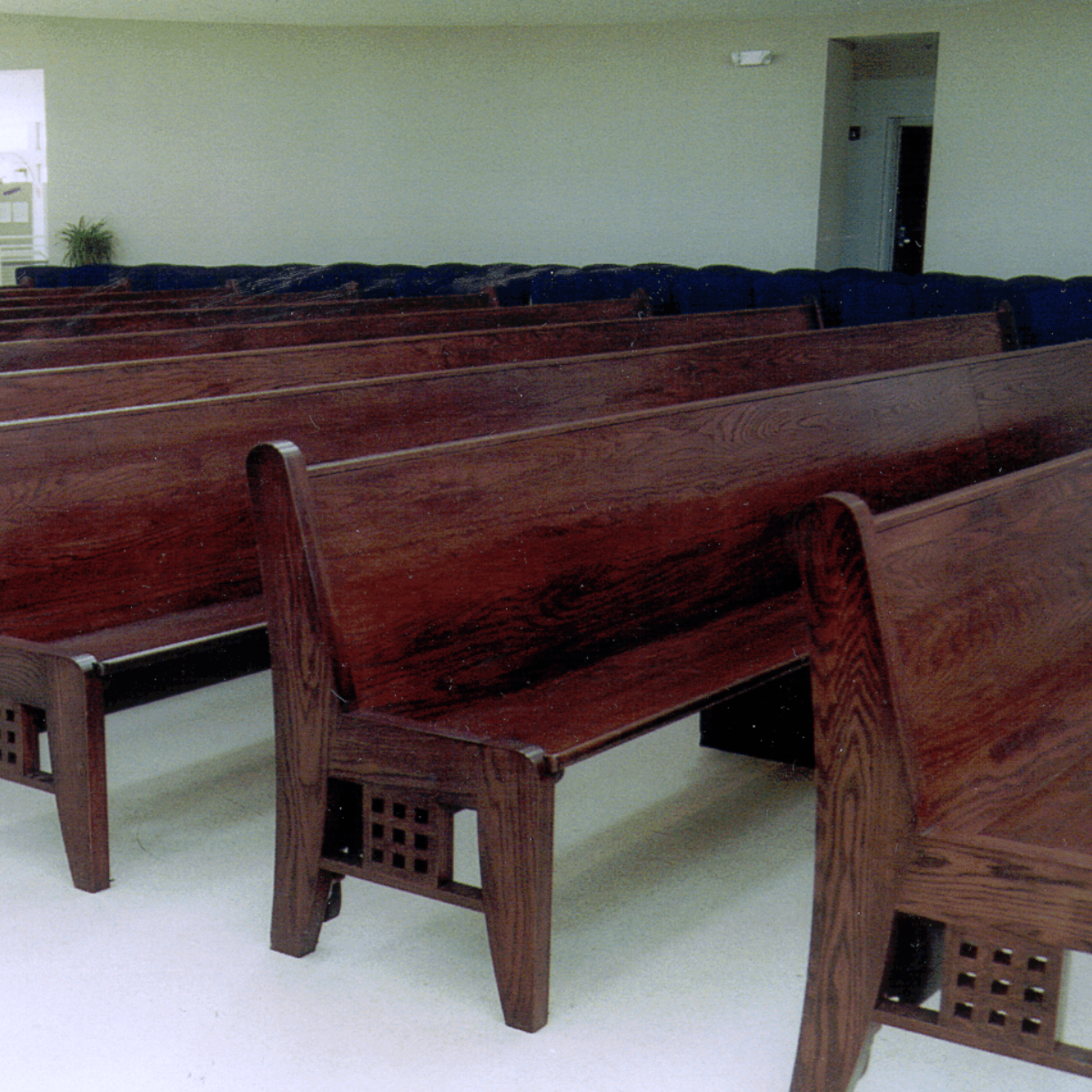
The most common pre-refinishing conditions we encounter include finish that has been worn completely through on armrests and seat edges, leaving bare wood exposed to oils, moisture, and dirt for years. We find color that has oxidized unevenly — darker in shaded areas, bleached near windows — so that pews in the same row no longer match. We find crazing, the fine network of cracks in old finish, which scatters light rather than reflecting it cleanly. And we almost always find structural issues: loose joints, cracked end panels, and failing glue that has gone unnoticed until a professional puts hands on the wood.
The Visual Transformation: What Changes After Refinishing
The most immediate and dramatic change after professional pew refinishing is the return of depth and warmth to the wood. A fresh, properly applied finish does not simply make the surface shiny — it allows light to penetrate the topcoat and reflect back from the wood grain beneath, producing the rich, three-dimensional glow that characterizes fine furniture and that faded, crazed old finish completely obscures.
What congregants notice first: Almost universally, the first thing people say when they return to a refinished sanctuary is that the room feels brighter and larger — not because anything structural has changed, but because light is reflecting from the pews properly again instead of being absorbed into a dull, damaged surface.
Beyond the immediate visual impact, color consistency is restored across the entire sanctuary. Pews that were bleached near south-facing windows are brought back into alignment with shaded pews. End caps that had faded to a different tone than the seat backs are matched and unified. The sanctuary reads as a whole again rather than as a collection of individually aging pieces.
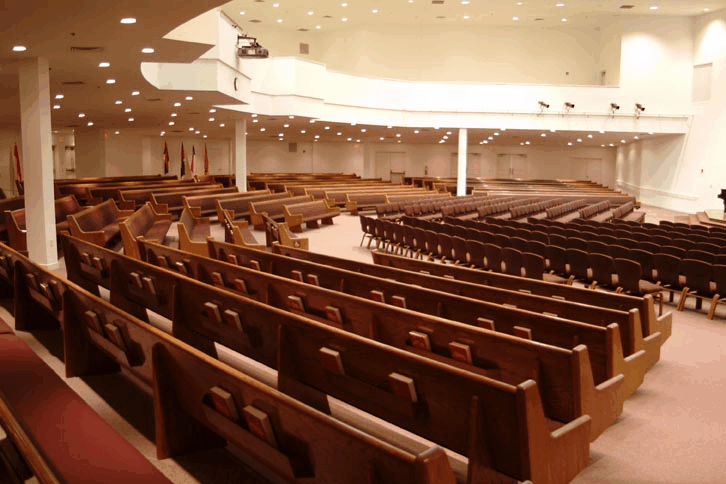
A full sanctuary refinishing project restores color and finish consistency from the front pew to the back row.
Churches also have the opportunity at refinishing time to update the color of their pews — darkening a light oak to a richer walnut tone, or refreshing a dated finish color with something more contemporary — without replacing a single piece of wood. This level of transformation is simply not possible with polishes, touch-up markers, or any surface-level maintenance product.
Beyond Appearance: The Structural Renewal
What photographs of before-and-after results cannot fully convey is the structural work that happens alongside the visual transformation. Professional pew refinishing is not a cosmetic service — it is a comprehensive restoration that addresses the integrity of the wood itself.
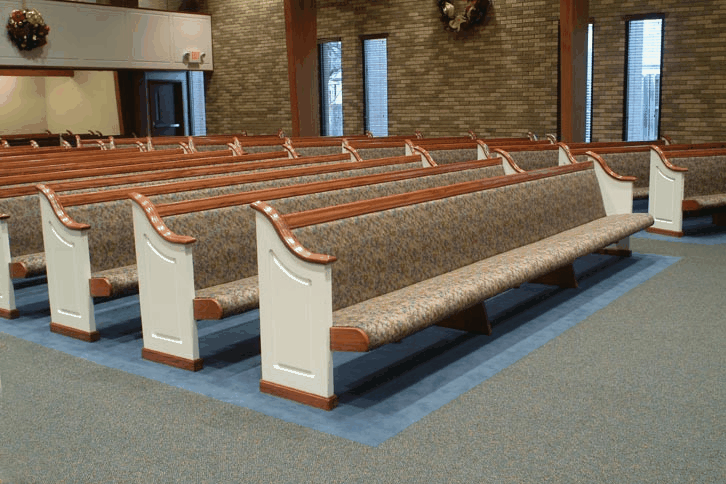
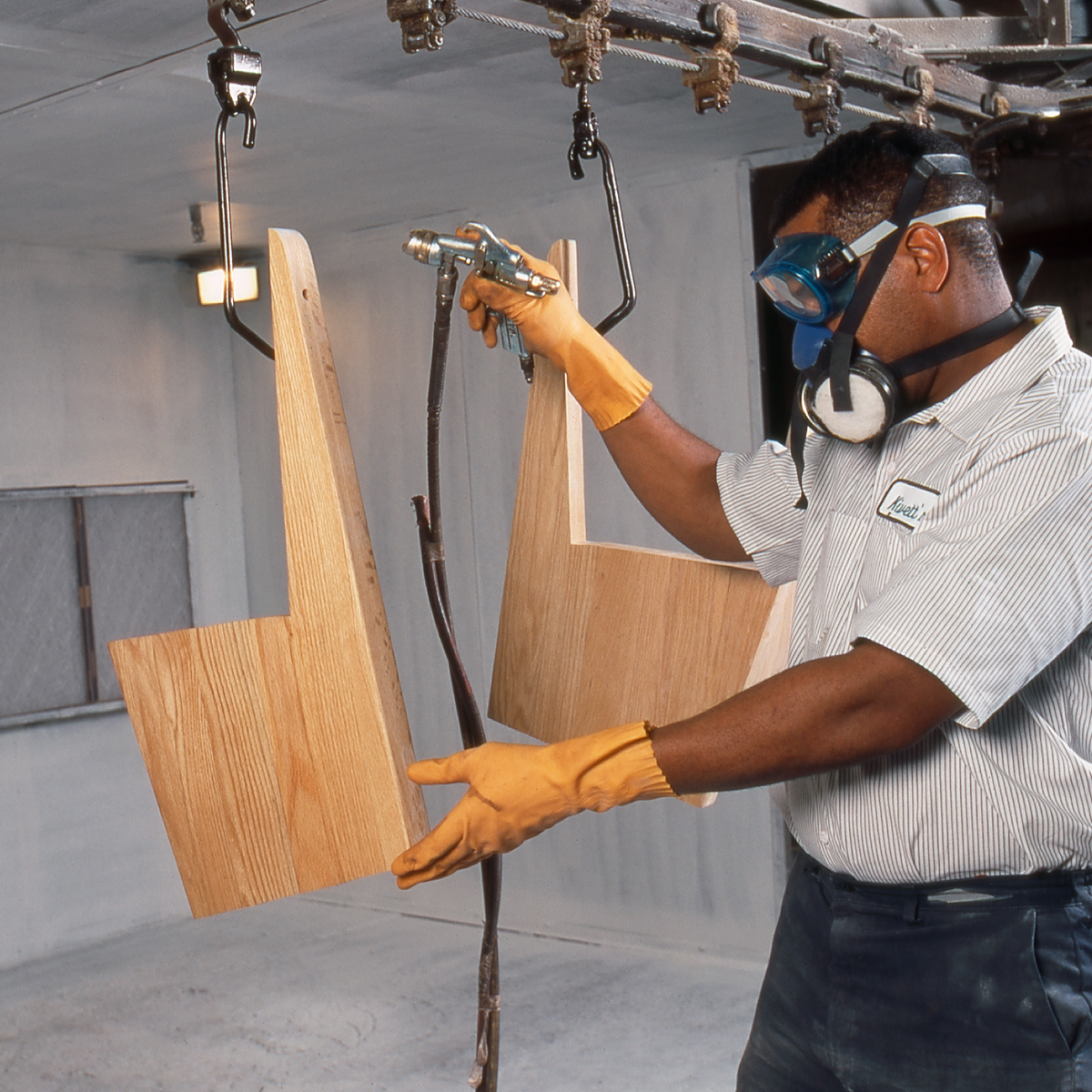
During the sanding and preparation phase, every pew is examined closely. Loose joints are re-glued and clamped. Cracked end caps are stabilized or replaced. Screw holes from decades of added hardware are filled. Checks and splits along the grain — often caused by years of humidity fluctuation — are addressed before any finish is applied.
The result is pews that are not only more beautiful but more stable. Joints that were beginning to rock and creak become solid again. End caps that were separating are re-secured. Surfaces that had become rough and splintered are smooth once more — important both for the comfort of worshipers and for the long-term durability of the new finish applied over them.
This structural renewal is one of the most significant and least visible parts of the transformation. A sanctuary full of pews that look beautiful and feel solid, that do not creak or wobble, that do not snag clothing on rough spots — this is what it means to truly restore rather than simply to repaint.
Everything That Changes in a Full Refinishing Project
To understand the full scope of the transformation, it helps to see exactly what a professional refinishing addresses versus what remains unchanged. Here is a comprehensive look at what refinishing does and does not do:
- Worn, dull finish stripped and replaced throughout
- Color matched or updated across all pews
- Surface scratches and scuffs removed by sanding
- Loose joints re-glued and structurally stabilized
- Cracked end caps repaired or replaced
- Hardware holes filled and sealed
- UV-induced color variation between pews corrected
- Protective topcoat renewed for decades of use ahead
What refinishing cannot do: Severely rotted or structurally compromised wood sections may need replacement rather than restoration. Cushioned pews with worn or torn upholstery require separate reupholstering. Your Kivett's project assessment will identify any needs that fall outside the scope of refinishing so there are no surprises.
Refinishing vs. Replacement: The Real Comparison
One of the most important things a before-and-after perspective reveals is the value proposition of professional refinishing over pew replacement. Many churches assume that replacement is the premium option and refinishing is a compromise. In practice, the opposite is often true.
| Factor | Refinishing | Replacement |
|---|---|---|
| Relative Cost | Fraction of replacement | Very high per linear foot |
| Historical Character | Fully preserved | Lost entirely |
| Wood Quality | Original old-growth wood retained | Often lesser quality new wood |
| Sanctuary Disruption | Minimal — section by section | Full closure often required |
| Customization | Color updated at no extra cost | Custom colors add cost |
| Timeline | Weeks | Months (production + installation) |
| Environmental Impact | No waste — existing wood preserved | Old pews discarded |
Solid wood pews built forty or sixty years ago were often constructed from old-growth timber that is simply no longer available at any price. The grain is tighter, the wood denser and more durable than most new pews. Refinishing preserves this irreplaceable material while giving it a surface that looks and performs as well as new.
What the Congregation Experiences: More Than Aesthetics
The transformation of a sanctuary through pew refinishing is not purely physical. Church leaders who have been through the process consistently report something harder to quantify: a renewal of congregational pride and an uplift in the atmosphere of worship.
When the refinishing was complete and our congregation walked in on Sunday morning, several people stopped in the doorway. We heard things like, "I had forgotten how beautiful this room is." That is what we were trying to give back to them — the feeling that this is a place that has been cared for, that their worship matters, that this house deserves to look its best.
— Church Administrator, Kivett's Restoration ClientThere is a theological dimension to the stewardship of a sanctuary's physical space. A worn, neglected interior communicates something — unintentionally — about how a congregation values its place of worship. A restored, well-maintained sanctuary communicates the opposite: that this community takes seriously the care of the space set apart for encountering the sacred.
For many congregations, a pew refinishing project becomes a moment of collective investment — a visible, tangible expression of care for the community's shared space. It is not uncommon for projects to be funded through designated giving campaigns, with members who have worshiped in those pews for decades contributing specifically because of the meaning the space holds for them.
The before-and-after of pew refinishing, at its deepest level, is not just about the wood. It is about what the space means to the people who gather there — and what it feels like to care for it well.
Ready to See What's Possible in Your Sanctuary?
Every pew refinishing project begins the same way: with an honest, on-site assessment that shows you exactly what is possible for your specific pews, wood species, and sanctuary conditions. There are no obligations and no assumptions — just a clear picture of what the work involves and what the result will look like.
Kivett's Fine Church Furniture has been delivering transformations like the ones described in this article since 1958. We have worked in sanctuaries of every size, denomination, and age — from small country churches with fifty-year-old pine pews to large urban cathedrals with elaborate carved oak seating.
Contact us today to schedule your free on-site pew assessment →
Your Sanctuary Deserves to Look Its Best
Don't let worn, faded pews define the first impression of your worship space. Kivett's can bring them back — beautifully.
Request a Free EstimateTrusted by Congregations Nationwide
Hear from churches we have served and find us on the map.