


What Is the Best Finish for Church Pews?
The best finish for church pews is a hard, clear topcoat in a low sheen that can be repaired when something eventually scratches it. Stain gets all the attention at the committee meeting. The finish over it is what decides how the pews look in year twelve.

The Short Answer
For most sanctuaries, the best finish for church pews is a catalyzed commercial topcoat in satin. It is hard enough for weekly seating, resistant to cleaning products, low enough in sheen to hide wear, and repairable when a section gets damaged.
That answer surprises some committees, because the question usually arrives framed as a choice between two products someone saw at a hardware store. Pews are not a dining table. They are commercial seating that gets sat on, leaned on, and slid across by hundreds of people a month, then wiped down by whoever volunteered that week with whatever was under the sink.
So the useful question is not which finish is best in general, but which finish holds up to that particular kind of life. The rest of this page walks through it.
Back to topWhat a Pew Finish Has to Survive
A finish on a pew is doing more work than a finish on almost any other piece of furniture in the building. Before comparing products, it helps to list what it is up against:
- Abrasion. Clothing, belts, purses and hymnals rubbing the seat edge and pew back every service. The front edge of the seat and the top rail wear first.
- Hand contact. Body oils on armrests and pew ends, the spots people grip to stand up. Those areas darken or dull long before the rest of the pew.
- Cleaning products. Disinfectants and all-purpose sprays can soften or haze some finishes over time. A finish that looks fine on day one can fail from the cleaning schedule, not the congregation.
- Sunlight. Ultraviolet light through sanctuary windows fades stain and shifts finish color, which is why pews by the windows rarely match pews in the center.
- Humidity swings. Wood moves as the building heats and cools. A finish that is too brittle can craze into fine cracks as it moves.
The USDA Forest Products Laboratory's chapter on finishing wood makes the same point in technical terms: film-forming finishes protect wood best when the film stays intact, and anything that breaks the film (wear, cracking, harsh chemicals) lets moisture and grime reach the wood underneath. For how cleaning habits play into this, see the church steward's guide to maintaining wood pews year-round.
Back to topThe Finish Families, Compared
Wood finishes come in a handful of families. Each is a real option for furniture. Not all of them are a good option for pews.
Traditional lacquer
Dries fast, looks beautiful, and is the easiest family to spot-repair, because new lacquer melts into the old coat and blends. The trade-off is durability: it resists heat, chemicals and abrasion less than catalyzed finishes, and older formulations can amber and turn cloudy in humid rooms. Fine for pews that see light use and gentle cleaning. Less ideal for a sanctuary that hosts a preschool on weekdays.
Catalyzed lacquer and conversion varnish
These cure through a chemical reaction rather than simple drying, which makes a much harder, more chemical-resistant film. This family is common on commercial and institutional furniture for exactly that reason: it stands up to daily use and regular cleaning. It is harder to spot-repair invisibly than traditional lacquer, so a damaged area is more often refinished as a whole piece or section. For most pews this is the strongest all-round choice.
Polyurethane
Tough and water-resistant. Oil-based polyurethane ambers noticeably with age, which can look warm on oak but will shift a pale or white-painted pew toward yellow. Water-based polyurethane stays clearer. Both build a plastic-like film that is difficult to blend when repairing one area, so a scratch often means redoing the whole surface rather than a patch.
Penetrating oil and wax
Lovely on a hand-rubbed table that gets polished every month. A poor fit for pews. Oils and waxes offer little protection against moisture, body oils and cleaners, they need regular reapplication, and a fresh coat can transfer to Sunday clothes. Pews need a film finish.
| Finish family | Durability on pews | Ease of spot repair | Color change with age |
|---|---|---|---|
| Traditional lacquer | Moderate | Easiest | Can amber over time |
| Catalyzed lacquer / conversion varnish | High | Harder; often redone by section | Low to moderate, depending on product |
| Oil-based polyurethane | High | Difficult to blend | Noticeable ambering |
| Water-based polyurethane | Moderate to high | Difficult to blend | Stays clearer |
| Oil or wax | Low | Easy, but needs constant upkeep | Darkens with reapplication |

Light oak shows finish color change first. A clear, non-ambering topcoat keeps a natural pew looking natural.
Back to topWhy Sheen Matters More Than People Expect
Sheen is how much light the finish reflects, from flat through satin and semi-gloss to full gloss. It is mostly discussed as a style choice. On pews it is a practical one.
A high-gloss pew looks spectacular the day it is installed and shows everything afterward: fingerprints on the pew back, dull patches where people sit most, every fine scratch from a zipper or ring. Gloss also throws glare back from sanctuary lights and windows. Satin and other low sheens diffuse that light, so the same wear simply does not read from across the room.
A quick test before you choose. Stand at the back of your sanctuary on a sunny morning and look at the pews nearest the windows. If you can already see where people sit, a glossier finish will make that more obvious, not less.
Stain Is the Color, Finish Is the Armor
Committees often use "finish" to mean the color. Refinishers use it to mean the protective coat on top. Both decisions matter, and they affect each other.
Stain gives the wood its color and is chosen from samples. Kivett's shows available options on its fabric and stain selection page. The finish goes over the stain, protects it, and changes how it reads: an ambering topcoat warms a stain over the years, and a higher sheen makes a dark stain look darker. That is why the two are best chosen together rather than on separate evenings.
Wood species matters too. Oak's open grain takes stain differently from walnut or cherry, and each ages differently under the same finish. Oak, walnut, or cherry covers those differences.
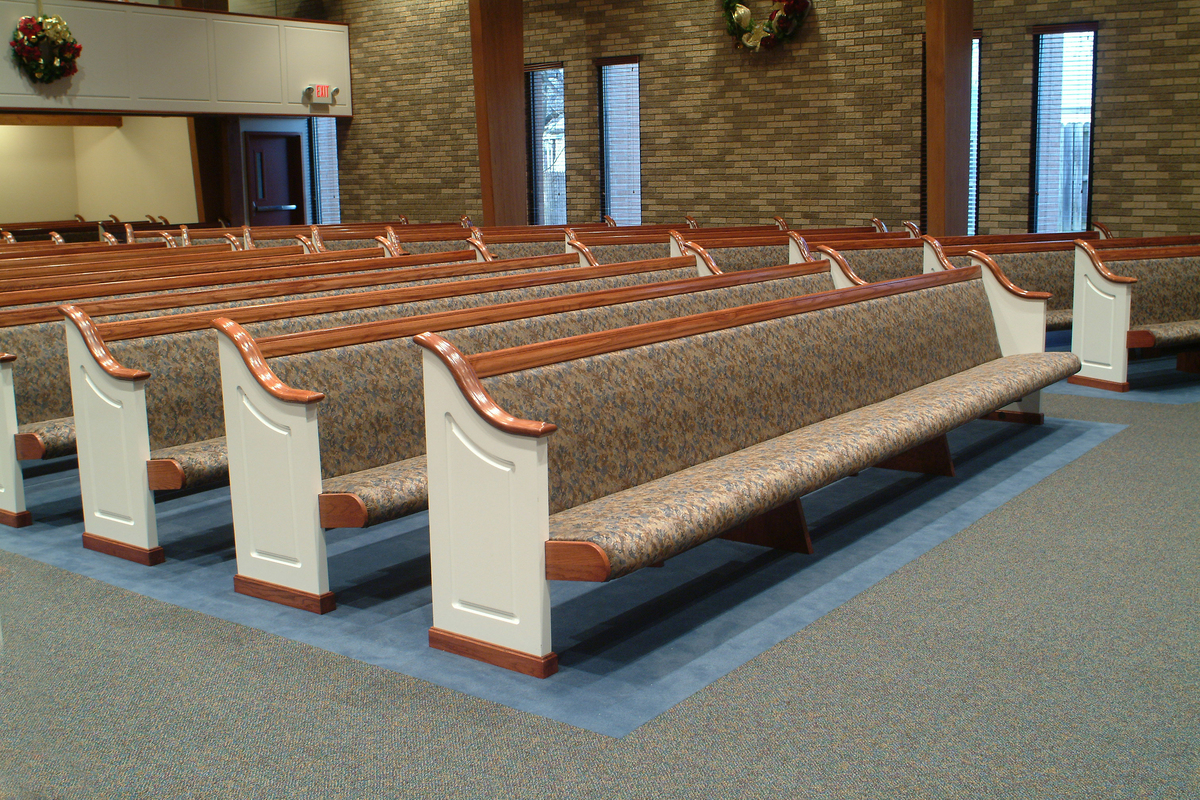
Two-tone pews pair a painted body with stained caps. The topcoat has to keep the white from yellowing and the stain from fading.
Back to topFrequently Asked Questions
What is the best finish for church pews?
The best finish for church pews is a hard, clear topcoat in a low sheen, applied over a properly prepared and stained surface, and chosen so that it can be repaired later. For most sanctuaries that means a catalyzed commercial finish in satin. The right answer for a specific sanctuary depends on how heavily the pews are used, how much sunlight reaches them, and how the church plans to clean them.
Is lacquer or polyurethane better for church pews?
Neither wins on every count. Oil-based polyurethane is tough but ambers with age and is harder to blend when one area is repaired. Traditional lacquer is easy to repair and blends well, but it resists chemicals and abrasion less than catalyzed finishes. Catalyzed lacquers and conversion varnishes sit between the two and are common on commercial furniture that sees daily use, which is the category church pews belong to.
What sheen is best for church pews?
Satin or another low sheen suits most sanctuaries. A low sheen hides fine scratches, fingerprints and wear on armrests and pew backs far better than gloss, and it does not throw glare back from sanctuary lighting or windows. Gloss shows every mark and every patch of uneven wear.
Can you use an oil or wax finish on church pews?
It is not a good fit. Penetrating oil and wax finishes look warm but offer little protection against the moisture, body oils, cleaning products and abrasion that pews face every week, and they need regular reapplication. They also transfer to clothing when fresh. A film-forming topcoat is the practical choice for seating.
Does the finish affect how long refinished pews last?
Yes, alongside preparation, sunlight, humidity and cleaning habits. A durable finish that is correctly applied and cared for protects the wood through years of weekly use, while the wrong cleaning products can wear down even a good finish early. Kivett's covers the factors that shorten or extend finish life in its guide to how long church pew refinishing lasts.
How do we choose the right finish for our sanctuary?
Request a free consultation online or call (800) 334-1139. Kivett's looks at the pews, the wood species, the light in the room and how the sanctuary is used, and recommends a stain and finish together, so the color you choose and the protection over it are decided as one.
Related Reading
If you are not sure your pews need a new finish yet, start with signs your church pews need restoration. For the wood itself, see the best type of wood for church pews, and for the full process, what happens during a Kivett's pew restoration project. Service details are on the refinishing page, with finished work in the pew gallery.
Choose the Color and the Protection Together
Clinton, NC. Refinishing pews for churches across the Eastern United States since 1958.