


Can Church Pews Be Modified? Shortening, Wheelchair Spaces and Adding Pews
Yes. Solid wood church pews can usually be shortened, cut back for wheelchair spaces, fitted with new racks, or joined by new pews built to match. Your sanctuary changed. Your pews can change with it.
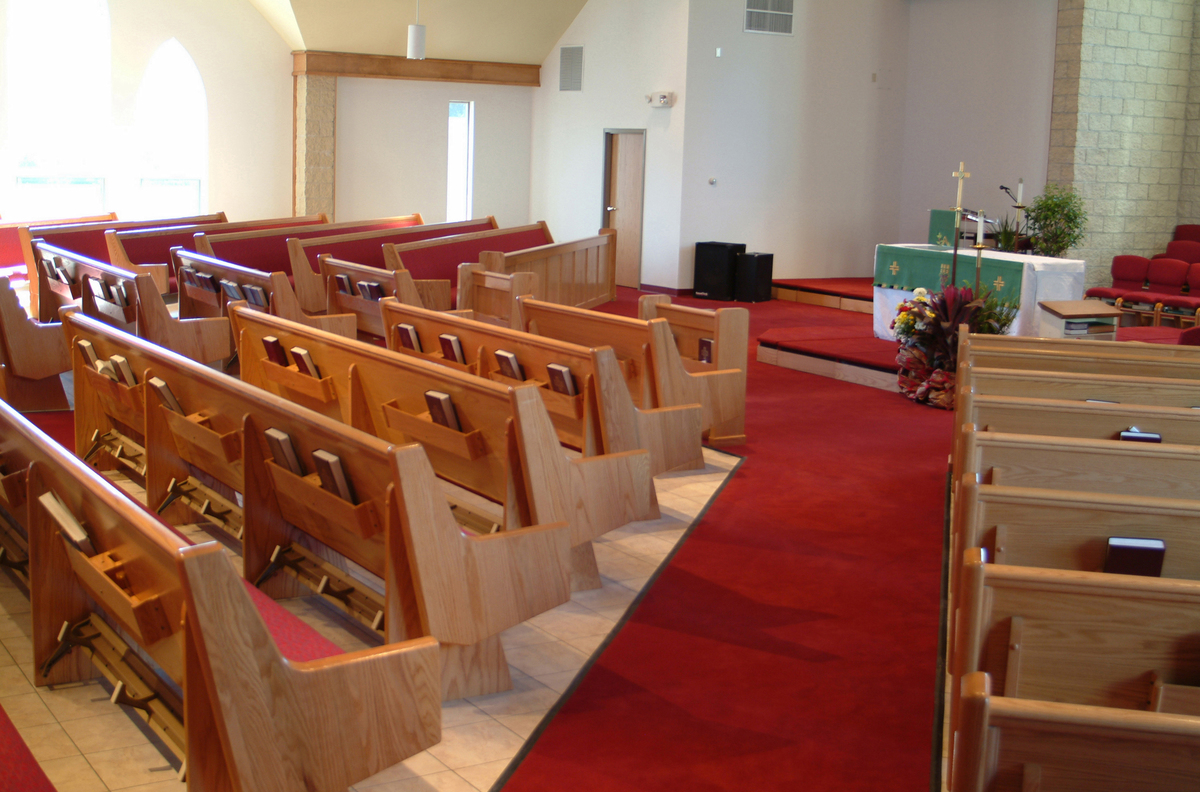
The Short Answer
Most solid wood pews can be modified rather than replaced. The real constraint is rarely the cut itself. It is the pew end: any change that exposes a new end has to be finished with one that matches the style, species and finish of the pews beside it.
This question tends to show up when something about the congregation has changed and the pews have not. A member now uses a wheelchair and is parked in the aisle every Sunday. The praise team needs more room up front. Attendance grew and the back wall needs two more rows. The building committee is looking at forty perfectly good oak pews and wondering whether "good" still means "fits."
Kivett's builds pew ends and pew bodies in-house at its Clinton, North Carolina plant, which is the part most modifications depend on. What follows is what each common change involves.
Back to topThe Common Modifications
1. Shortening a pew
The pew body is cut to its new length and an end is refitted, or a new end is built to match. Done well, the shortened pew looks like it was always that size. Done poorly, it looks sawn off. Churches shorten pews to widen a side aisle, clear a path to an exit, make room for a piano or baptistry, or create wheelchair spaces at the end of a row.
2. Cutting wheelchair spaces into rows
Instead of seating wheelchair users in the aisle or at the very front, a pew is shortened or a section is removed so the space sits within the congregation, next to family. This is usually the most meaningful modification a church makes, and it is covered in detail in the next section.
3. Adding new pews that match the old ones
When a sanctuary expands, new pews can be manufactured to match the existing style and wood species. Because the existing pews have aged, a matching project often pairs the new pews with refinishing of the old ones, so the whole room ends up with one consistent color rather than two.
4. Adding accessories
Bookracks, communion cup holders, and pencil and card holders can be added to the backs of existing pews. Kivett's lists the available options on its pew accessories page. Kneelers can also be added, though they change the row spacing you need, so check how far apart church pews should be before committing.
5. Adding or replacing upholstery
Wood-seat pews can be upholstered for comfort, and worn upholstery can be replaced in a new fabric. Kivett's covers this on its direct upholstery page.
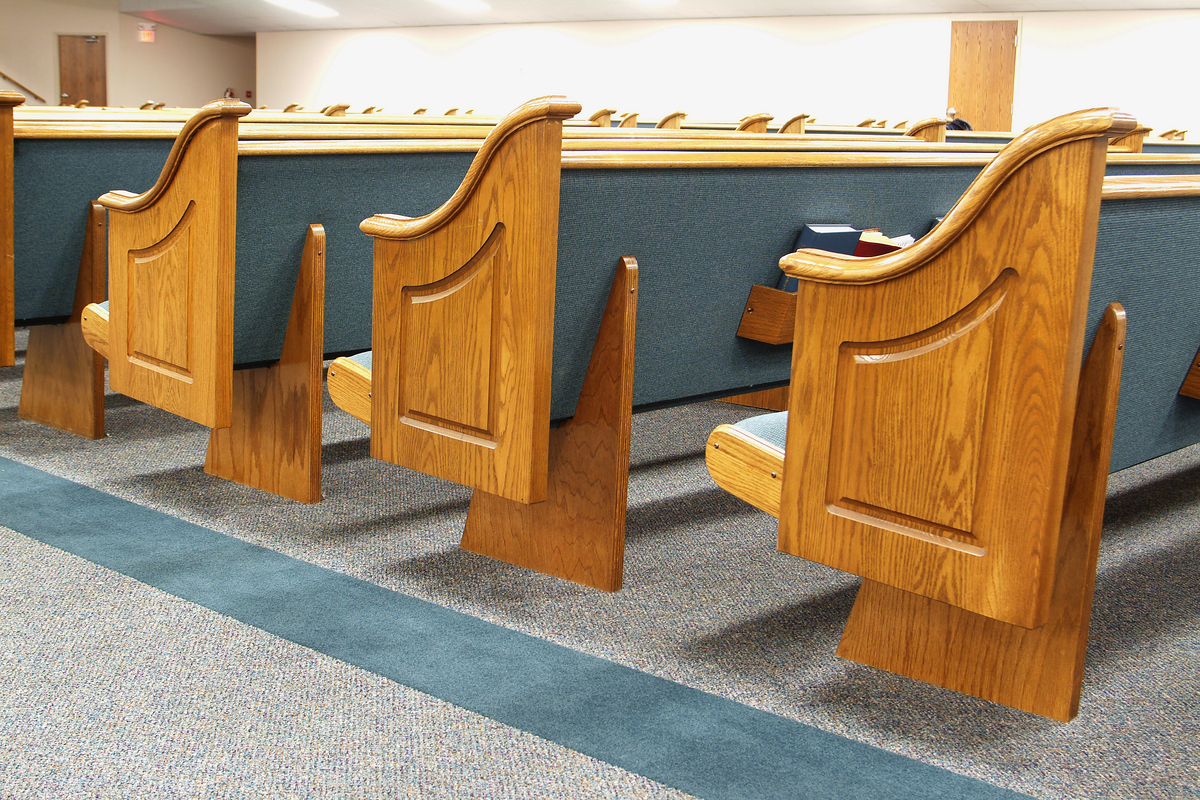
The pew end carries the style of the whole row. A modification looks original only when the new end matches these.
Back to topPlanning Wheelchair Spaces
Religious organizations are exempt from Title III of the Americans with Disabilities Act, so federal law does not require a church to create wheelchair seating. Many churches choose to anyway, and the 2010 ADA Standards for Accessible Design are the most widely used guide for doing it well. State and local building codes can still apply to your building, particularly during renovation, so confirm with your local code official.
How big a wheelchair space needs to be
| Dimension | 2010 ADA Standards minimum |
|---|---|
| Width, single space | 36 inches |
| Width, two spaces side by side | 33 inches each |
| Depth, entered from front or rear | 48 inches |
| Depth, entered from the side | 60 inches |
How many spaces to plan for
| Seats in the sanctuary | Wheelchair spaces |
|---|---|
| 4 to 25 | 1 |
| 26 to 50 | 2 |
| 51 to 150 | 4 |
| 151 to 300 | 5 |
| 301 to 500 | 6 |
Two practical points matter as much as the numbers. First, spread the spaces out rather than putting all of them in the front row, so a wheelchair user can choose where to sit like anyone else. Second, leave a companion seat beside each space, which a shortened pew does naturally.
The row you cut matters. A space at the end of a middle row, off the main aisle, puts a wheelchair user among the congregation with a clear line of sight. A space at the very front puts them on display. Ask the member who will use it where they would like to sit before anything is cut.
When Modifying Is the Wrong Answer
Not every pew is a good candidate. A refinisher who tells you so is doing the job properly.
- Structural damage. A pew with rot, insect damage or a failed main frame should be repaired or replaced before anyone talks about shortening it. What causes church pew damage over time covers what to look for.
- Curved pews. A curved pew can often be shortened, but turning a straight pew into a curved one generally means building a new pew.
- A full layout change. If the plan changes the angle, spacing and length of most rows, the modifications can add up to more than new seating would. At that point, compare against restoring your pews versus buying new ones, or against pews versus chairs for flexible seating.
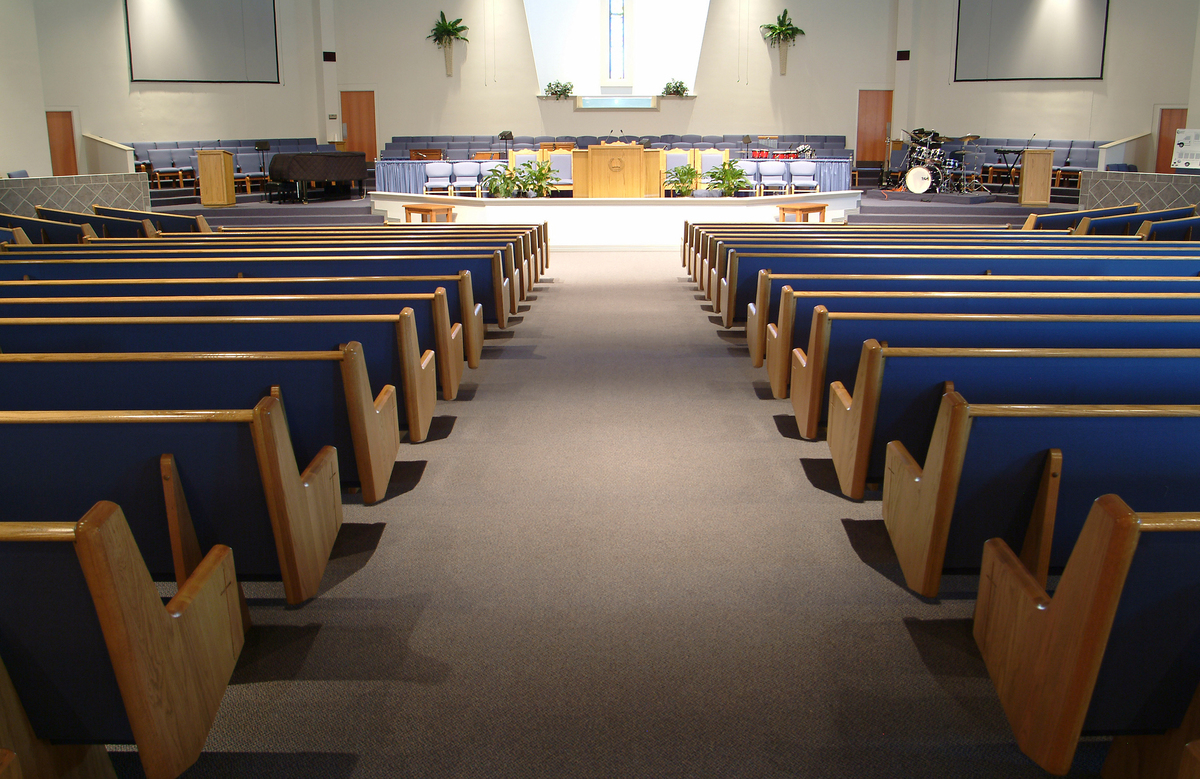
Wider aisles and clear exits are the most common reasons churches shorten a row of pews.
Back to topFrequently Asked Questions
Can church pews be modified?
Yes. Solid wood pews can usually be shortened, cut to create wheelchair spaces, fitted with new accessories, reupholstered, or joined by new pews built to match. Whether a specific pew can be modified depends on its construction, the condition of the wood, and whether its pew ends can be rebuilt or replaced to match the originals.
Can you shorten a church pew?
In most cases, yes. The pew body is cut to the new length and a pew end is refitted or a new one is built to match, so the shortened pew is finished like the original rather than looking cut. The hard part is not the cut but the end: the new end has to match the style, wood species and finish of the pews around it.
How much space does a wheelchair space in a sanctuary need?
Under the 2010 ADA Standards for Accessible Design, a single wheelchair space is at least 36 inches wide, or 33 inches each when two spaces sit side by side. It is at least 48 inches deep when entered from the front or rear, and at least 60 inches deep when entered from the side. Religious organizations are exempt from ADA Title III, but many churches use these dimensions anyway, and state or local building codes may still apply.
How many wheelchair spaces should a sanctuary have?
The 2010 ADA Standards scale wheelchair spaces to seating capacity: one space for 4 to 25 seats, two for 26 to 50, four for 51 to 150, five for 151 to 300, and six for 301 to 500. The standards also call for spaces to be dispersed rather than all placed in one spot. Churches are exempt from ADA Title III, so treat this as a widely used guide and check local code.
Can you add new pews that match our old ones?
Usually, yes. Kivett's manufactures pews, pew bodies and pew ends in-house at its Clinton, North Carolina plant, including new pieces built to match an existing style and wood species. Because older pews have aged, the new pews are often finished alongside a refinish of the existing ones so the room reads as one set.
Can bookracks or cup holders be added to existing pews?
Yes. Bookracks, communion cup holders, and pencil and card holders can be added to the backs of existing pews. It is most efficient to add them while pews are already being refinished, because the pew backs are being worked on anyway.
How do we find out whether our pews can be modified?
Request a free consultation online or call (800) 334-1139. Kivett's looks at how your pews are built, their condition, and the layout you are aiming for, and tells you which modifications make sense and which pews are better replaced.
Related Reading
If only one pew is the problem, see whether you can repair just one damaged church pew. For standard sizes before you plan a change, see church pew dimensions and the parts of a church pew. For timing the work around services, read how to plan a church renovation without disrupting Sunday services.
Tell Us What Needs to Change
Clinton, NC. Building and refinishing church pews for congregations across the Eastern United States since 1958.